Introduction
A brand’s reputation is influenced by thousands of interactions that take place beyond its own website and marketing channels. Customers discuss products on social networks, publish reviews, share experiences in online communities, and mention companies in news articles.
These conversations can reveal valuable information about customer satisfaction, product quality, market positioning, and emerging reputation risks.
However, manually tracking brand discussions across numerous platforms is difficult. Relevant mentions may appear without directly tagging the company’s official accounts, making them easy to overlook.
Brand monitoring tools help organizations discover and analyze these conversations through keyword tracking, alerts, sentiment analysis, competitive monitoring, and reporting dashboards.
Some platforms focus on social listening and consumer intelligence. Others emphasize online reputation, media mentions, or accessible monitoring for smaller businesses.
Choosing suitable software requires understanding which sources matter, how accurately the platform identifies relevant conversations, and whether its findings can support practical decisions.
This guide compares ten established brand monitoring tools, examines their capabilities and limitations, and explains how organizations can use them to understand public perception and protect brand reputation.
What Are Brand Monitoring Tools?
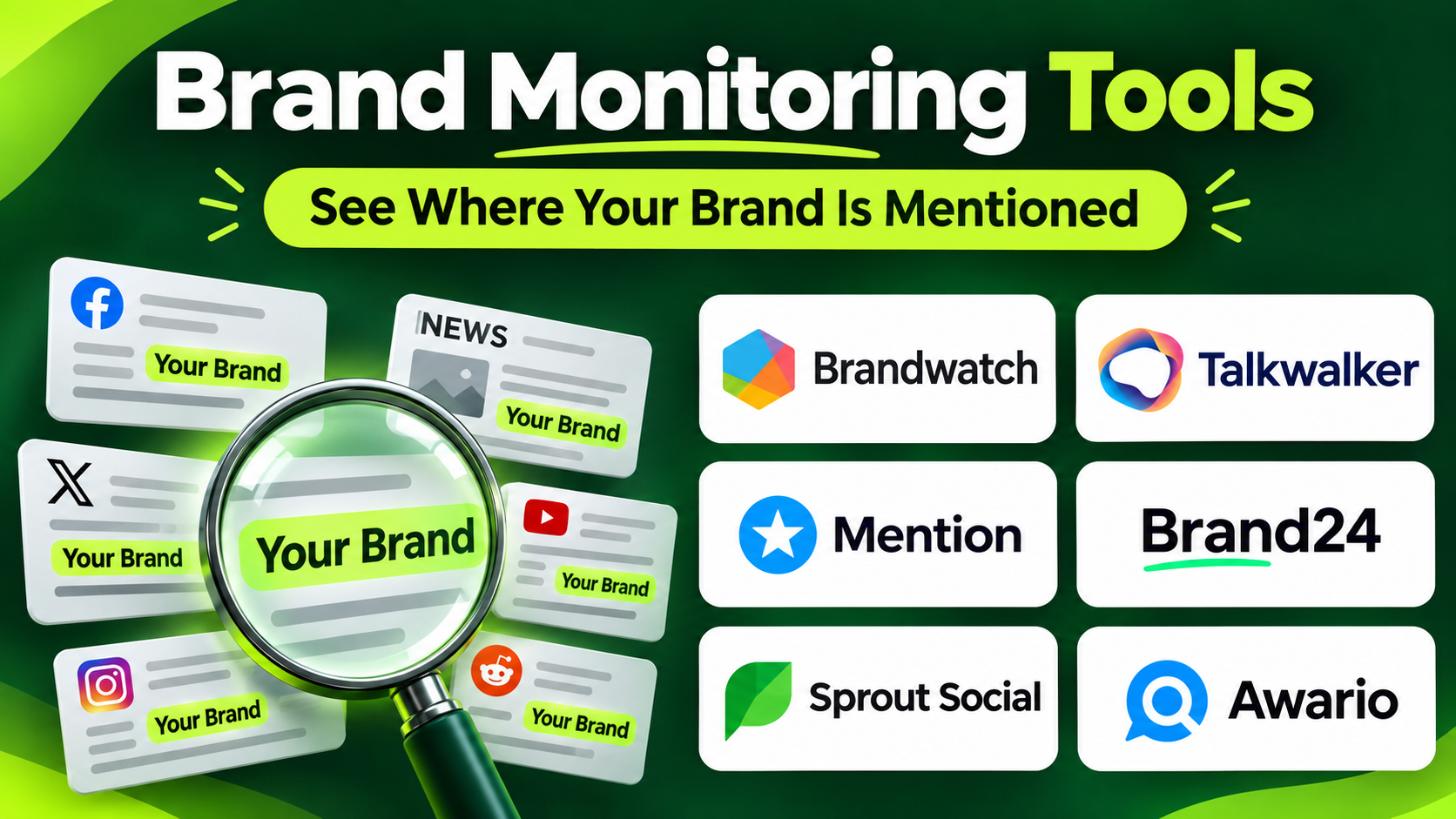
Brand monitoring tools are software platforms that help organizations identify, collect, and analyze references to their brands, products, executives, competitors, and related topics.
They may monitor public conversations across social networks, online news, blogs, forums, review websites, and other supported digital sources.
Brand monitoring is closely related to social listening, media monitoring, and reputation management, but each has a different emphasis.
Brand monitoring focuses on identifying and understanding mentions. Social listening often examines broader audience conversations and trends. Reputation management includes actions taken to improve customer experiences and address reputation-related issues.
How Brand Monitoring Works
Organizations begin by defining search terms, including brand names, product names, common abbreviations, and relevant spelling variations.
The platform collects matching content from supported sources and organizes the results into dashboards.
Users can review individual mentions, analyze conversation volume, identify recurring themes, and configure alerts for important developments.
Some platforms also estimate sentiment, identify influential sources, and compare brand visibility with competitors.
Benefits of Brand Monitoring Software
- Reputation awareness: Understand how customers and other audiences discuss the organization.
- Early issue detection: Identify complaints and emerging concerns before they become widespread.
- Customer insights: Discover recurring needs, frustrations, and product suggestions.
- Competitive intelligence: Compare public discussions involving competing brands.
- Campaign measurement: Evaluate how marketing initiatives influence brand conversations.
- Trend identification: Recognize emerging subjects relevant to the industry.
- Customer engagement: Find opportunities to respond to public feedback.
- Reporting efficiency: Consolidate information from multiple supported sources.
Top 10 Brand Monitoring Tools
1. Brandwatch
Best For: Enterprises requiring advanced social listening, consumer intelligence, and brand perception analysis.
Short Description
Brandwatch is a consumer intelligence platform that helps organizations understand digital conversations and audience behavior.
It is particularly relevant to companies that need more than basic notifications whenever their brand name appears online.
Brandwatch enables research teams to investigate conversation themes, analyze sentiment, compare competitors, and understand changes in audience discussion.
Its capabilities support brand strategy, market research, customer insights, and campaign evaluation.
For multinational organizations, advanced analytical workflows can help identify differences in how audiences discuss products across markets.
However, Brandwatch requires thoughtful query design and analytical interpretation. A large dataset does not automatically produce accurate conclusions.
Key Features
- Social listening: Collects relevant conversations from supported digital sources.
- Consumer intelligence: Helps identify audience interests and discussion patterns.
- Sentiment analysis: Estimates the tone of brand-related conversations.
- Topic analysis: Organizes recurring themes and subjects.
- Competitive benchmarking: Compares selected brand conversation indicators.
- Trend identification: Highlights changes in discussion volume and topics.
- Audience insights: Supports research into consumer behavior and interests.
- Custom dashboards: Presents monitoring results through configurable visualizations.
- Historical analysis: Supports examination of conversation changes over available periods.
Benefits
Brandwatch helps organizations understand the context behind brand mentions.
Its research capabilities can support strategic decisions involving product positioning, customer experience, and marketing communication.
Pros
- Advanced consumer intelligence.
- Strong analytical capabilities.
- Competitive monitoring.
- Useful topic and sentiment analysis.
- Suitable for enterprise research.
Cons
- Requires analytical expertise.
- Can be complex for small teams.
- Source access varies.
- Commercial pricing requires evaluation.
Use Cases
Consumer perception research, product launch monitoring, competitor analysis, and brand strategy.
Best Suited For
Enterprise marketing departments, consumer insights teams, and global brand managers.
2. Talkwalker
Best For: Global brands requiring sophisticated social listening and digital brand intelligence.
Short Description
Talkwalker is a social listening and consumer intelligence platform that helps organizations analyze online discussions and understand changes in brand perception.
Its capabilities support monitoring across multiple digital environments and markets.
Companies can use Talkwalker to investigate brand-related conversations, identify emerging issues, and compare their visibility with competitors.
The platform is particularly relevant when organizations need to analyze large volumes of discussion and present findings to different business stakeholders.
Its visual and analytical capabilities can help researchers examine how brand identity appears in supported online content.
However, automated classifications and source coverage should be evaluated before relying on them for important decisions.
Key Features
- Brand mention monitoring: Tracks relevant digital references.
- Social listening: Analyzes conversations across supported platforms.
- Sentiment analysis: Estimates discussion tone.
- Visual brand analysis: Supports selected visual content recognition capabilities.
- Trend detection: Identifies emerging discussion patterns.
- Competitive analysis: Compares brand visibility.
- Alerts: Helps identify important conversation changes.
- Analytics dashboards: Supports reporting and research.
Benefits
Talkwalker helps multinational organizations examine brand conversations across different markets and audiences.
Its analytical capabilities are useful for strategic brand research and reputation awareness.
Pros
- Advanced social intelligence.
- Global brand monitoring orientation.
- Visual analysis capabilities.
- Competitive benchmarking.
- Enterprise reporting.
Cons
- Advanced configuration requirements.
- Enterprise-oriented pricing.
- Source limitations.
- Automated sentiment requires verification.
Use Cases
International brand tracking, product launch analysis, crisis awareness, and competitive intelligence.
Best Suited For
Global consumer brands, enterprise marketing teams, and digital intelligence departments.
3. Brand24
Best For: Small and medium-sized businesses seeking online mention tracking and accessible brand analytics.
Short Description
Brand24 is an online monitoring platform that helps organizations discover references to their names, products, and competitors.
It provides a focused environment for tracking online conversations without requiring a comprehensive enterprise intelligence system.
Users can create monitoring projects, review mentions, receive alerts, and analyze discussion patterns.
The platform also provides sentiment-related and influence-oriented indicators that can help teams prioritize important content.
Brand24 is useful for growing businesses that want to monitor public perception and respond to relevant online discussions.
Its coverage should still be tested against the websites and social channels most important to the organization.
Key Features
- Brand mention tracking: Identifies matching online content.
- Keyword projects: Organizes monitoring around selected topics.
- Alerts: Notifies users about relevant developments.
- Sentiment analysis: Helps classify discussion tone.
- Mention volume charts: Shows changes in conversation activity.
- Influence indicators: Helps identify potentially significant sources.
- Competitor monitoring: Supports comparative brand analysis.
- Reporting: Summarizes online monitoring results.
Benefits
Brand24 makes brand monitoring manageable for teams that lack dedicated intelligence analysts.
Its dashboards and alerts can reduce repetitive manual searching.
Pros
- Focused monitoring functionality.
- Accessible analytical dashboards.
- Useful mention alerts.
- Competitor tracking.
- Suitable for growing businesses.
Cons
- Source coverage varies.
- Automated sentiment is imperfect.
- Not a complete traditional media monitoring solution.
- Advanced enterprise needs may require other tools.
Use Cases
Online reputation monitoring, marketing campaign tracking, competitor awareness, and customer feedback discovery.
Best Suited For
SMBs, startups, digital marketing teams, and growing ecommerce brands.
4. Mention
Best For: Marketing and communications teams seeking straightforward online brand monitoring.
Short Description
Mention helps organizations track references to brands, competitors, and selected topics across supported online sources.
It is designed to simplify the process of discovering relevant conversations and understanding how brands are discussed.
Users can configure monitoring queries and review results through a centralized dashboard.
Mention also supports alerts and reporting, making it useful for teams that need regular brand visibility updates.
Its focused approach can be easier to manage than broader enterprise consumer intelligence systems.
However, organizations should verify source coverage and analytical capabilities before relying on it for comprehensive reputation management.
Key Features
- Keyword monitoring: Tracks brand names and relevant terms.
- Online mention discovery: Identifies matching public content.
- Competitor tracking: Monitors selected competing brands.
- Alerts: Supports timely awareness of new mentions.
- Sentiment indicators: Helps evaluate discussion tone.
- Social monitoring: Includes supported social conversations.
- Analytics: Summarizes monitoring activity.
- Reporting: Helps share results with stakeholders.
Benefits
Mention reduces the effort required to monitor multiple online sources.
It is useful for organizations seeking consistent brand awareness without extensive analytical infrastructure.
Pros
- Focused monitoring workflows.
- Useful alerts.
- Competitor tracking.
- Accessible reporting.
- Suitable for smaller teams.
Cons
- Source access varies.
- Limited compared with some enterprise suites.
- Advanced analysis may require other products.
- Not a complete customer service system.
Use Cases
Startup reputation monitoring, campaign awareness, competitor research, and online brand tracking.
Best Suited For
Small marketing teams, agencies, and growing businesses.
5. Meltwater
Best For: Enterprises combining brand monitoring with news intelligence, social listening, and reputation analysis.
Short Description
Meltwater provides media intelligence and social listening capabilities that help organizations monitor how their brands appear across supported news and digital channels.
It is particularly relevant to communications departments that need to evaluate both traditional media visibility and online public conversations.
Users can monitor selected keywords, identify important coverage, analyze trends, and prepare reports.
The platform can also support competitive intelligence and broader reputation management initiatives.
Meltwater’s integrated approach is valuable when brand monitoring forms part of a larger communications strategy.
However, organizations should review package requirements and verify coverage in their priority markets.
Key Features
- News monitoring: Tracks relevant media coverage.
- Social listening: Analyzes supported digital conversations.
- Brand alerts: Notifies teams about important mentions.
- Sentiment analysis: Supports coverage interpretation.
- Competitive intelligence: Compares selected brand indicators.
- Trend analysis: Identifies changes in public discussion.
- Reporting dashboards: Presents monitoring findings.
- Communication analytics: Supports reputation and campaign evaluation.
Benefits
Meltwater connects brand monitoring with broader media intelligence.
This can help organizations understand how news coverage and digital conversations interact.
Pros
- Broad media intelligence.
- Social monitoring.
- Enterprise reporting.
- Competitive analysis.
- Suitable for corporate communications.
Cons
- Implementation may be complex.
- Pricing depends on scope.
- Some features may be unnecessary for small teams.
- Coverage limitations require verification.
Use Cases
Corporate reputation, global brand monitoring, crisis communication, and competitive analysis.
Best Suited For
Enterprises, large agencies, and corporate communications departments.
6. Sprout Social
Best For: Social media teams seeking brand monitoring alongside publishing, engagement, and social analytics.
Short Description
Sprout Social is a social media management platform that supports publishing, engagement, analytics, and social listening through available products.
Its monitoring capabilities are useful for organizations that want to understand brand-related conversations while also managing official social accounts.
Teams can use supported listening features to investigate relevant topics and identify patterns in audience discussion.
The broader platform also helps organizations coordinate responses and maintain consistent social communication.
This makes Sprout Social particularly relevant when monitoring and social media operations are closely connected.
Organizations should verify which listening capabilities require additional products or subscriptions.
Key Features
- Social listening: Monitors selected conversations and topics.
- Social analytics: Evaluates engagement and audience activity.
- Unified inbox: Helps teams manage supported social interactions.
- Publishing workflows: Coordinates social content scheduling.
- Trend analysis: Identifies relevant discussion patterns.
- Competitive insights: Supports selected comparative analysis.
- Team collaboration: Helps coordinate social communication.
- Reporting: Provides social performance summaries.
Benefits
Sprout Social connects monitoring with everyday social media operations.
Teams can investigate conversations and coordinate appropriate responses within a broader management environment.
Pros
- Integrated social management.
- Listening and analytics capabilities.
- Team collaboration.
- Useful reporting.
- Suitable for established social teams.
Cons
- Advanced listening may require additional licensing.
- Less focused on traditional media.
- Can be costly for smaller teams.
- Social coverage depends on platform permissions.
Use Cases
Social reputation monitoring, customer engagement, campaign analysis, and community management.
Best Suited For
Social media teams, consumer brands, and marketing agencies.
7. Hootsuite
Best For: Organizations combining social media management with monitoring and audience engagement.
Short Description
Hootsuite is a social media management platform that helps organizations publish content, monitor activity, manage engagement, and evaluate social performance.
Its monitoring-related capabilities can support brand awareness and social listening workflows.
Businesses use Hootsuite to coordinate multiple social accounts and identify relevant discussions within supported channels.
Its main advantage is the connection between social operations and monitoring.
For organizations that already rely on Hootsuite for publishing and engagement, monitoring capabilities may reduce the need for disconnected workflows.
However, businesses requiring advanced media intelligence should evaluate whether the available listening features meet their requirements.
Key Features
- Social monitoring: Tracks selected activity and conversations.
- Social listening capabilities: Supports broader analysis through eligible offerings.
- Content scheduling: Coordinates publishing.
- Engagement management: Helps respond to supported social interactions.
- Analytics: Evaluates social activity.
- Team collaboration: Supports shared account management.
- Competitive insights: Provides selected comparative information.
- Reporting: Summarizes social performance.
Benefits
Hootsuite helps teams connect brand awareness with social publishing and engagement.
It is useful for organizations that manage several social channels.
Pros
- Broad social management.
- Monitoring and engagement workflows.
- Multi-account support.
- Reporting.
- Team collaboration.
Cons
- Not primarily a traditional news monitoring platform.
- Advanced listening depends on offerings.
- Pricing can increase with requirements.
- Source access is limited by supported networks.
Use Cases
Social brand monitoring, community management, campaign evaluation, and competitor awareness.
Best Suited For
Marketing teams, agencies, and organizations managing multiple social accounts.
8. YouScan
Best For: Consumer brands seeking social listening and visual brand recognition.
Short Description
YouScan is a social listening platform focused on analyzing online conversations and visual content.
It is particularly relevant to consumer-facing brands whose products may appear in photographs and social posts without being explicitly mentioned in accompanying text.
Its visual analysis capabilities can help identify supported brand references in images.
YouScan also supports conversation analysis, sentiment insights, and trend identification.
This makes it useful for marketing teams studying product visibility, consumer behavior, and campaign performance.
However, visual recognition results require validation, and supported sources may not cover every relevant platform.
Key Features
- Social listening: Monitors relevant online discussions.
- Visual recognition: Identifies selected brand-related imagery.
- Sentiment analysis: Estimates conversation tone.
- Topic analysis: Identifies recurring subjects.
- Trend monitoring: Tracks changes in discussion.
- Audience insights: Supports consumer research.
- Competitive monitoring: Compares relevant brand discussions.
- Analytics dashboards: Presents monitoring findings.
Benefits
YouScan helps brands investigate visual and textual discussions together.
This can provide additional context for consumer products frequently shared through images.
Pros
- Visual brand monitoring.
- Social intelligence.
- Consumer research capabilities.
- Trend analysis.
- Useful for image-heavy industries.
Cons
- Visual classification is not perfect.
- Source access varies.
- May require specialist analysis.
- Less focused on traditional broadcast monitoring.
Use Cases
Consumer product monitoring, fashion brand research, retail campaign analysis, and visual brand visibility.
Best Suited For
Consumer brands, retail marketing teams, and social intelligence analysts.
9. Awario
Best For: Small businesses and digital marketers seeking keyword-based brand monitoring and online conversation discovery.
Short Description
Awario is a social listening and online monitoring platform designed to help organizations discover relevant brand conversations.
It allows users to create keyword-based monitoring projects and review matching content through a centralized interface.
The platform can support brand reputation tracking, competitor research, and discovery of relevant public conversations.
Awario is particularly useful for smaller marketing teams that need practical monitoring without enterprise-scale research infrastructure.
Its effectiveness depends on the quality of monitoring queries and the availability of supported sources.
Key Features
- Keyword tracking: Monitors selected brand and industry terms.
- Online mention discovery: Finds matching public conversations.
- Competitor monitoring: Tracks competing brands.
- Sentiment analysis: Supports interpretation of discussion tone.
- Alerts: Helps users identify relevant new content.
- Conversation analysis: Organizes monitoring results.
- Lead discovery support: Helps identify potentially relevant public discussions.
- Reporting: Summarizes monitoring activity.
Benefits
Awario provides a focused approach to online brand monitoring.
It can help small teams discover relevant conversations without manually searching numerous websites.
Pros
- Keyword-based monitoring.
- Competitor tracking.
- Accessible workflows.
- Sentiment indicators.
- Useful for smaller organizations.
Cons
- Coverage varies.
- Advanced enterprise analytics may be limited.
- Automated classifications need review.
- Not a complete customer support platform.
Use Cases
Startup brand tracking, competitor monitoring, online conversation research, and digital marketing analysis.
Best Suited For
Startups, small businesses, consultants, and digital marketers.
10. Determ
Best For: PR and marketing teams seeking brand mention monitoring with automated reporting.
Short Description
Determ is a media monitoring and analytics platform that helps organizations track brand-related content across supported online sources.
Its capabilities include keyword monitoring, alerts, sentiment-related analysis, and reporting.
Determ is useful for communications teams that need to produce regular summaries of brand visibility.
It can support monitoring of company names, products, competitors, and selected industry topics.
The platform’s reporting capabilities are particularly relevant to agencies managing recurring client monitoring requirements.
Organizations should validate geographic and source coverage before adopting it as their primary monitoring system.
Key Features
- Brand mention tracking: Identifies relevant online references.
- Keyword monitoring: Supports custom brand queries.
- Media alerts: Notifies teams about new content.
- Sentiment analysis: Helps categorize discussion tone.
- Competitor tracking: Supports comparative monitoring.
- Analytics dashboards: Presents visibility trends.
- Automated reporting: Reduces manual report preparation.
- Campaign analysis: Evaluates brand communication activity.
Benefits
Determ can simplify routine brand monitoring and reporting.
It is especially useful when communications teams must share findings with multiple stakeholders.
Pros
- Monitoring and reporting integration.
- Useful alerts.
- Competitive analysis.
- Recurring report support.
- Suitable for PR workflows.
Cons
- Coverage requires validation.
- Sentiment results may need manual review.
- Advanced consumer research needs may exceed its scope.
- Pricing depends on selected capabilities.
Use Cases
Agency brand monitoring, PR reporting, corporate reputation tracking, and campaign analysis.
Best Suited For
PR agencies, communications teams, and marketing departments.
Brand Monitoring Tools Comparison Table
| Tool | Primary Strength | Social Listening | Reporting | Best For |
|---|---|---|---|---|
| Brandwatch | Consumer intelligence | Advanced | Advanced | Enterprises |
| Talkwalker | Global brand intelligence | Advanced | Advanced | Multinational brands |
| Brand24 | Online mention monitoring | Strong | Strong | SMBs |
| Mention | Brand alerts | Yes | Yes | Small teams |
| Meltwater | Media and social intelligence | Strong | Advanced | Corporate communications |
| Sprout Social | Social management and listening | Available | Strong | Social teams |
| Hootsuite | Social operations | Available | Strong | Marketing teams |
| YouScan | Visual social intelligence | Advanced | Strong | Consumer brands |
| Awario | Keyword monitoring | Yes | Yes | Startups |
| Determ | Monitoring and reporting | Selected sources | Strong | PR agencies |
How to Choose the Best Brand Monitoring Software
1. Identify Relevant Sources
Determine whether your customers discuss your brand primarily on social networks, review websites, forums, news publications, or industry communities.
2. Evaluate Keyword Search
Look for support for brand variations, product names, exclusions, and advanced search operators.
3. Test Mention Relevance
A brand with a common name may produce many unrelated results.
Test whether the platform can distinguish relevant mentions from unrelated content.
4. Review Sentiment Analysis
Automated sentiment is useful for identifying patterns but can misunderstand sarcasm and context.
5. Consider Visual Monitoring
Consumer brands may benefit from image recognition when products appear without textual mentions.
6. Evaluate Alerts
Important changes should trigger timely notifications without overwhelming teams with irrelevant content.
7. Compare Competitive Intelligence
Choose tools that support consistent competitor queries and comparable reporting periods.
8. Examine Historical Data
Historical analysis helps distinguish temporary spikes from long-term reputation changes.
9. Assess Integrations
Monitoring insights may need to connect with customer service, PR, marketing, and reporting workflows.
10. Run a Pilot
Test the platform against known brand mentions before committing to a long-term subscription.
Best Brand Monitoring Software by User Type
| User Type | Suggested Tool | Reason |
|---|---|---|
| Enterprise researchers | Brandwatch | Advanced consumer intelligence |
| Global brands | Talkwalker | Multimarket digital analysis |
| Growing businesses | Brand24 | Accessible mention analytics |
| Small marketing teams | Mention | Focused alerts |
| Corporate communications | Meltwater | Media and social monitoring |
| Social media departments | Sprout Social | Integrated engagement |
| Multi-account marketing teams | Hootsuite | Social management workflows |
| Consumer product brands | YouScan | Visual brand recognition |
| Startups | Awario | Keyword-based monitoring |
| PR agencies | Determ | Monitoring and reporting |
Practical Example: Monitoring an Ecommerce Brand
A direct-to-consumer skincare company wants to understand how customers discuss its products.
Step 1: Define Objectives
The company wants to identify product complaints, measure campaign conversations, and monitor competitor visibility.
Step 2: Configure Keywords
The team creates queries for its brand name, product names, common abbreviations, and competitor brands.
Step 3: Select Sources
Priority sources include supported social platforms, online publications, blogs, and relevant public communities.
Step 4: Create Alerts
Notifications are configured for unusual mention spikes and potentially serious customer concerns.
Step 5: Establish a Baseline
The team reviews normal mention volume and recurring themes before launching a new product.
Step 6: Monitor Campaign Activity
During the launch, analysts classify conversations by relevance, sentiment, and topic.
Step 7: Review Results
Suppose the campaign generates these hypothetical results:
| Metric | Result |
|---|---|
| Relevant mentions | 1,200 |
| Positive mentions | 660 |
| Neutral mentions | 360 |
| Negative mentions | 180 |
| Positive share | 55% |
| Product-related complaints | 75 |
Positive share:
660 ÷ 1,200 × 100 = 55%
These numbers are illustrative.
Step 8: Investigate Complaints
The company discovers that several customers report confusion about product instructions.
Step 9: Improve Communication
The product team updates instructions and customer education materials.
Step 10: Measure Changes
The monitoring team reviews whether confusion-related discussions decline after the changes.
This demonstrates how brand monitoring can support practical improvements rather than simply produce dashboards.
Common Mistakes to Avoid
Tracking only exact brand names: Customers may use abbreviations, product names, or misspellings.
Treating all mentions equally: Source relevance and context matter.
Relying entirely on automated sentiment: Important findings need human review.
Ignoring customer feedback: Monitoring should inform product and service improvements.
Overreacting to isolated comments: Evaluate patterns before drawing conclusions.
Assuming complete source coverage: Every platform has limitations.
Frequently Asked Questions
1. What is brand monitoring software?
It is software that helps organizations identify and analyze online references to their brands, products, and competitors.
2. How is brand monitoring different from media monitoring?
Brand monitoring emphasizes brand-related conversations, while media monitoring often focuses more broadly on news and published coverage.
3. Which tool is best for enterprise brands?
Brandwatch, Talkwalker, and Meltwater are strong candidates depending on the required sources and analytical workflows.
4. Which tools are suitable for small businesses?
Brand24, Mention, and Awario are worth evaluating.
5. Can brand monitoring tools track competitors?
Yes. Most professional platforms support competitor keywords and comparison reports.
6. Can these tools detect negative mentions?
Many provide sentiment analysis and alerts, but automated results are not always accurate.
7. Do brand monitoring platforms track social media?
Many do, subject to supported networks and data access restrictions.
8. Can brand monitoring improve customer service?
Yes. Relevant public complaints can reveal issues that customer support teams should investigate.
9. What is social listening?
Social listening analyzes online conversations to understand audience behavior, trends, and perceptions.
10. What is brand sentiment?
Brand sentiment describes the estimated positive, negative, or neutral tone of relevant conversations.
11. Can monitoring tools identify influencers?
Some platforms provide indicators that help identify influential accounts or sources.
12. Is visual brand monitoring useful?
It can be useful when products or logos appear in images without text references.
13. How frequently should brands monitor mentions?
Frequency depends on the organization’s visibility, risk profile, and communication requirements.
14. What metrics matter most?
Relevant mention volume, recurring themes, sentiment patterns, complaint trends, and meaningful business outcomes.
15. What is the most important feature?
Reliable discovery of relevant conversations from the sources that matter to the organization.
Final Thoughts
Brand monitoring tools help organizations understand public conversations, identify customer concerns, and evaluate brand visibility.
Brandwatch and Talkwalker provide advanced consumer intelligence. Meltwater connects brand monitoring with broader media analysis, while Brand24, Mention, and Awario offer focused online monitoring workflows.
Sprout Social and Hootsuite connect monitoring with social media operations. YouScan emphasizes visual intelligence, and Determ supports recurring monitoring reports.
The best platform depends on the organization’s audience, relevant sources, analytical requirements, and available resources.
Brand monitoring creates the greatest value when insights lead to better products, clearer communication, and more responsive customer experiences.