Introduction
A bank changes how a payment product records reversals. Its customers see no difference. Several monitoring scenarios, however, begin to interpret reversed movements as completed transactions. Alert volumes rise, investigators spend time untangling duplicate activity, and the team has to determine when the change started affecting results. A new detection model would do little to resolve the issue. The first task is restoring a reliable record of which activity occurred.
AML transaction monitoring systems review financial activity for patterns that warrant assessment under an institution’s anti-money-laundering program. The platform may combine rules, statistical analysis, customer data, and investigation workflows. Its performance depends on a chain of decisions that starts with product data and ends with a documented disposition. In its U.S. bank examination materials, the FFIEC discusses suspicious activity identification, evaluation, and reporting, including manual and automated methods. A buyer can use that lifecycle to frame tests without assuming that one workflow suits every institution.
Reconcile the monitored population before tuning alerts
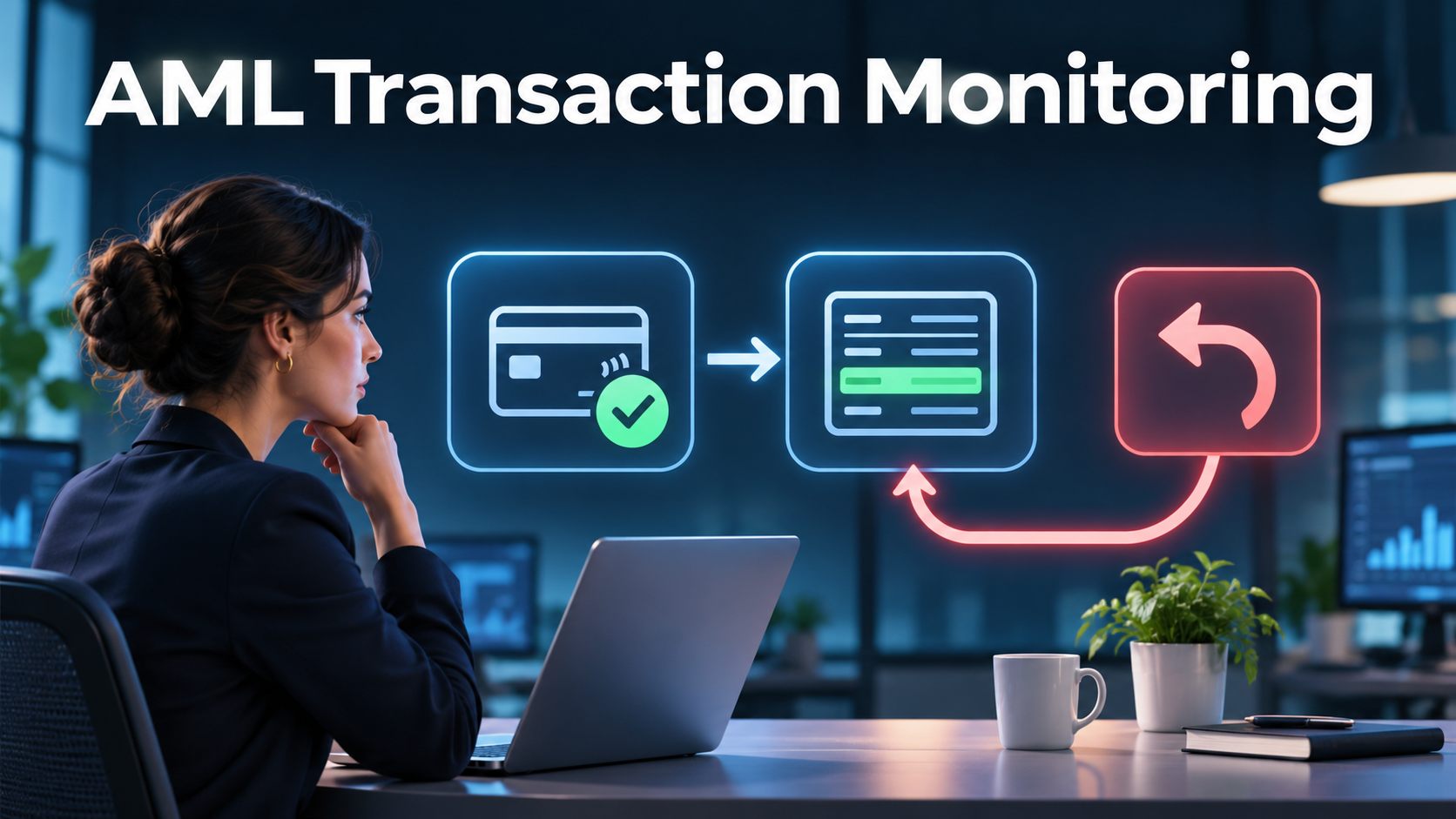
Start with a diagram of how financial activity enters monitoring. Identify source systems, products, accounts, channels, and legal entities. For each source, record the meaning of the transaction types and the stages at which the source creates or changes a record. A payment can produce an authorization, a posting, a settlement update, and a reversal. The monitoring team must know which records represent economic activity for each scenario.
Require a reconciliation report that shows records delivered, accepted, rejected, and awaiting retry. The report should make it easy to see a material change by product or channel. A firm-wide record count can look normal when a small but important payment feed stops arriving. Compare amounts as well as counts where appropriate and investigate differences against the source ledger.
Inspect how customer and counterparty data joins to the activity. One person or business may have several products or identifiers. A weak link can split related activity across profiles, while an incorrect link can combine activity from unrelated customers. Give the vendor a sample with a merged customer record, an incomplete counterparty, and a late correction. Check how the system updates the case and whether historical decisions can still be interpreted.
Choose detection methods the team can validate
Rules can express defined scenarios in terms that specialists can review. Statistical models can help prioritize cases or identify activity that differs from a relevant baseline. Network analysis can help investigators examine relationships across accounts or transactions. Each method relies on assumptions about the data and the behavior it is intended to identify.
Record why a scenario exists, which populations it covers, and what information it needs. Define the limitations. A baseline built from mature accounts may be unsuitable for a new product with little history. A relationship graph built from sparse counterparty fields may omit important connections. Clear descriptions of these limitations let the institution decide where it needs other controls or more data.
Validate changes using approved historical and synthetic samples. Compare the outcomes for relevant groups and investigate why cases moved in or out of the review queue. If the provider supplies a model score, ask whether the investigator can identify the contributing evidence and whether the institution can track changes in the populations entering the model. Treat model updates and changes in source data as distinct events, since either one can change alert behavior.
Give investigators context they can trust
The analyst needs the original activity, related accounts or transactions, relevant customer information, and the reason the system raised the alert. A timeline should distinguish recorded events from relationships the software inferred. If a payment appears twice because two systems supply related records, the investigator should see the linkage and be able to inspect the originals.
Alerts can be linked to a case when they concern the same subject or connected activity. Test the grouping logic with two similar customers and one person operating across several products. A case manager needs to understand why records were grouped and whether the linkage can be corrected. Ask what happens to previous decisions when a new alert joins a closed case.
Build the investigation record around the decision. Capture what the reviewer examined, what information remains unknown, the reason for escalation or closure, and any approval required by internal policy. If reporting occurs in another system, test the handoff and the feedback that confirms what happened. Apply access rules to particularly sensitive case material and review exports with the same care as the user interface.
Watch workload without mistaking it for effectiveness
Operational reports should show alert age, queue size, review time, and the mix of scenarios and products. These measures help supervisors allocate staff and spot a backlog. Pair them with quality measures such as the clarity of disposition records, the results of independent case review, and the coverage of the monitored population.
An increase in volume may reflect a change in customer behavior, a data defect, or an adjustment to detection logic. A decline can reflect better prioritization or missing data. Build a review that lets staff compare the alert series with feed completeness, release history, and changes in the business. The reviewer should be able to explain which events preceded the change and what evidence supports that explanation.
Sample cases that were closed quickly and cases that ranked below the normal review threshold where the institution’s validation process allows it. Include newer products and segments with limited data. This helps the team assess whether a workflow creates blind spots by focusing analyst attention on cases that already resemble past investigations.
Run the pilot through a correction and a decision
Choose a dataset the institution knows well. Introduce a controlled late feed, a corrected transaction, and a customer identity merge. Ask the platform to show how each change affects monitoring, alert context, and previously reviewed records. Then have investigators work a case from intake through disposition and, where appropriate for the test, simulate the transfer into a reporting workflow.
Compare implementation costs against those exercises. Include source integration, historical data, validation, model governance, investigator licensing, and the ongoing work of maintaining scenarios. Confirm that the institution can extract case records and enough context to explain earlier results if it changes vendors. Ask which data is retained by the provider and how it can be retrieved under the contract.
Make the final decision on evidence from both halves of the workflow. Engineering should be able to show which activity the platform processed and which data it rejected or corrected. Investigators should be able to explain why a case was raised and how they reached their decision. A system that supports both tasks gives the institution a stronger foundation for operating and reviewing its monitoring program.