Introduction
Learning a new language creates opportunities for education, travel, career development, and international communication.
However, traditional language learning can be difficult to maintain alongside work, school, and personal responsibilities.
Learners often struggle with finding suitable materials, practicing consistently, understanding grammar, remembering vocabulary, and gaining confidence in conversation.
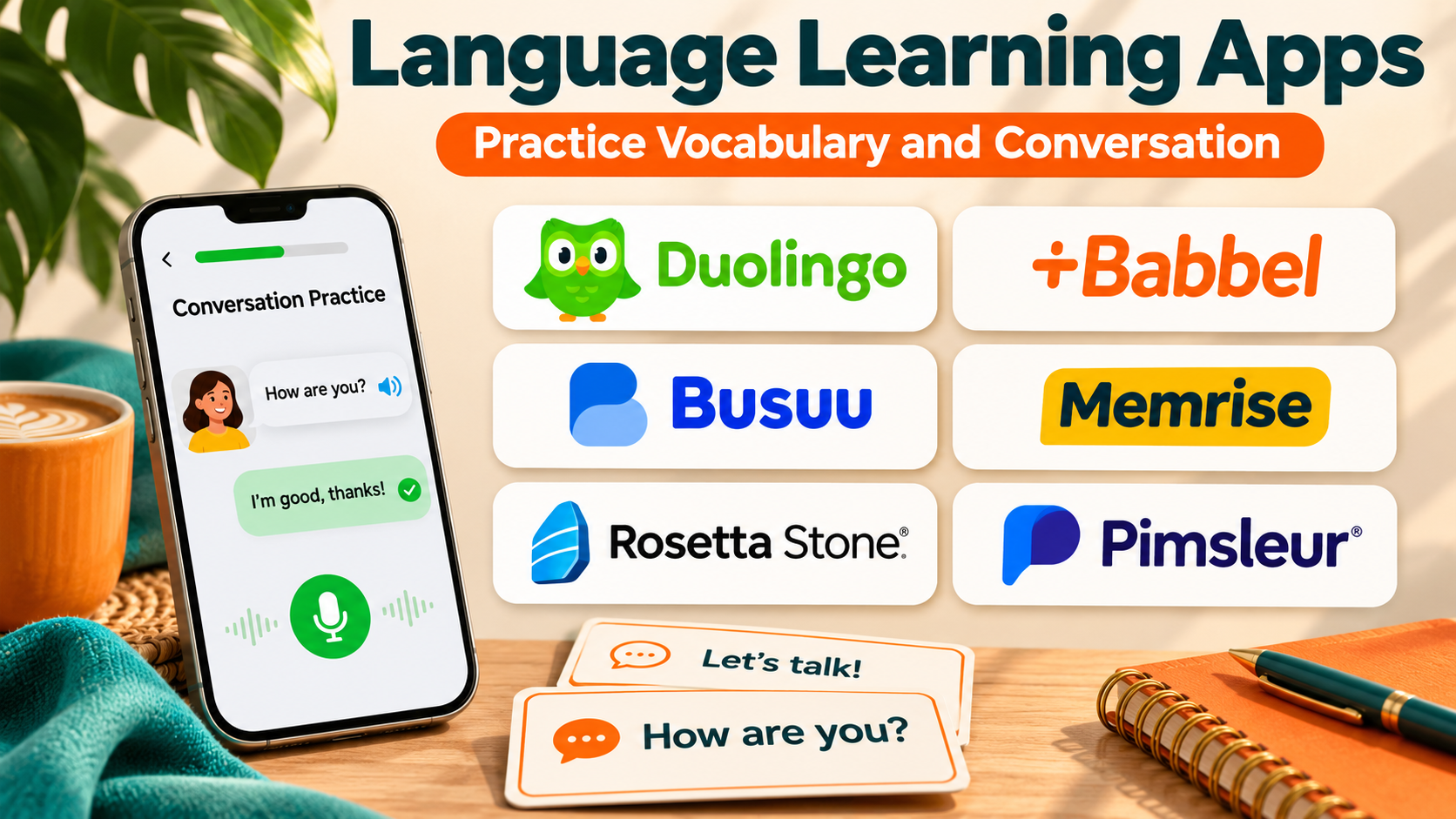
Language learning apps help address these challenges by providing structured lessons, interactive exercises, pronunciation practice, and personalized study experiences.
Some applications use gamification to encourage daily learning. Others emphasize real conversations, audio immersion, grammar explanations, or personalized tutoring.
Artificial intelligence has also introduced new ways to practice speaking and receive feedback.
However, no single app is ideal for every learner.
A beginner studying basic vocabulary has different needs from a professional preparing for international meetings or an advanced student seeking conversational fluency.
The effectiveness of an application depends on its teaching approach, language coverage, lesson quality, feedback mechanisms, and how consistently the learner practices.
This guide compares ten established language learning apps, explains their strengths and limitations, and provides practical guidance for choosing software based on individual learning goals.
What Are Language Learning Apps?
Language learning apps are digital platforms designed to help users develop reading, writing, listening, speaking, vocabulary, and grammar skills in another language.
They deliver educational activities through mobile applications, websites, audio lessons, interactive exercises, and live tutoring environments.
How Language Learning Apps Work
A typical language learning experience includes:
- Language selection: The learner chooses a target language.
- Level assessment: Some applications evaluate existing knowledge.
- Learning path: Lessons are organized according to difficulty and learning objectives.
- Vocabulary development: Users learn words and phrases through examples and repetition.
- Grammar instruction: Exercises introduce sentence structures and language rules.
- Listening practice: Learners hear native or synthesized speech.
- Speaking practice: Users repeat phrases or participate in conversations.
- Progress tracking: Applications record completed lessons and learning activity.
- Review: Previously learned material is revisited to improve retention.
Main Types of Language Learning Apps
Gamified learning apps encourage frequent practice through short activities, rewards, and progress indicators.
Structured course platforms organize lessons around grammar, vocabulary, and communication objectives.
Audio-first applications emphasize listening and spoken responses.
Immersion platforms teach through images, stories, videos, and authentic language materials.
Tutoring marketplaces connect learners with human instructors.
Vocabulary systems use flashcards and spaced repetition to improve long-term retention.
These approaches are complementary rather than mutually exclusive.
Top 10 Language Learning Apps
1. Duolingo
Best For: Beginners and casual learners seeking engaging daily language practice.
Short Description
Duolingo is a language learning platform known for its gamified approach to education.
It offers short lessons that combine vocabulary, reading, listening, translation, and selected speaking activities.
The application uses progress indicators, rewards, and learning streaks to encourage consistent participation.
Duolingo is particularly useful for beginners who want an accessible introduction to a new language without committing to lengthy study sessions.
Its mobile-first design makes it convenient for learning during short breaks.
The platform also offers advanced subscription features and AI-assisted experiences in supported courses.
However, learners seeking conversational fluency should supplement app exercises with authentic listening and speaking practice.
Key Features
- Gamified lessons: Uses rewards and progression to encourage participation.
- Short learning sessions: Makes regular practice manageable.
- Vocabulary exercises: Introduces words and common expressions.
- Listening activities: Develops recognition of spoken language.
- Speaking exercises: Provides pronunciation-related activities in supported lessons.
- Personalized review: Revisits material based on learning progress.
- Progress tracking: Displays completed activities and milestones.
- Multiple language courses: Offers a broad selection of languages.
- AI-assisted features: Provides additional learning experiences in eligible offerings.
Benefits
Duolingo helps learners establish a regular study habit.
Its accessible interface reduces the initial difficulty of beginning a new language.
Short lessons also make it easier to maintain consistent exposure.
Pros
- Beginner-friendly interface.
- Engaging gamification.
- Accessible free learning options.
- Convenient mobile experience.
- Broad language selection.
Cons
- Limited conversational depth in some courses.
- Grammar explanations vary.
- Gamification may distract from actual learning goals.
- Advanced features require subscriptions.
- Course depth differs by language.
Use Cases
Beginner learning: Develop basic vocabulary and sentence structures.
Daily practice: Maintain consistent language exposure.
Travel preparation: Learn common expressions.
Supplementary study: Reinforce classroom learning.
Best Suited For
Beginners and casual learners who benefit from short, motivating lessons.
2. Babbel
Best For: Adults seeking structured language courses with practical conversation and grammar instruction.
Short Description
Babbel is a language learning platform that emphasizes structured lessons and practical communication.
Its courses are designed to help learners understand vocabulary and grammar while developing skills for everyday situations.
Unlike applications focused heavily on game mechanics, Babbel generally provides more explicit explanations of language structures.
Lessons introduce useful expressions and encourage learners to apply them in context.
The platform is particularly relevant to adults learning for travel, work, relocation, or personal development.
Its course-based approach provides a clear progression, although language availability is more limited than some broad multilingual platforms.
Key Features
- Structured courses: Organizes lessons into progressive learning paths.
- Grammar explanations: Provides instruction on sentence structure.
- Practical dialogues: Introduces everyday communication.
- Vocabulary review: Reinforces previously learned material.
- Speech recognition: Supports pronunciation-related exercises.
- Listening activities: Develops comprehension of spoken language.
- Progress tracking: Records completed lessons.
- Mobile learning: Supports flexible study schedules.
Benefits
Babbel provides a more structured learning experience than many casual language apps.
Its practical dialogues help learners connect grammar and vocabulary with real communication.
Pros
- Clear lesson progression.
- Useful grammar explanations.
- Practical conversational content.
- Suitable for adult learners.
- Focused course design.
Cons
- Requires payment for substantial course access.
- Smaller language selection than some competitors.
- Speaking practice cannot fully replace conversation.
- Advanced content varies by language.
- Less suitable for highly customized learning.
Use Cases
Travel preparation: Learn useful everyday expressions.
Professional development: Build communication skills.
Relocation: Study language for daily life.
Best Suited For
Adult learners who prefer organized instruction and practical language explanations.
3. Busuu
Best For: Learners seeking structured courses combined with community feedback.
Short Description
Busuu is a language learning platform that combines guided lessons with social learning features.
Its courses address vocabulary, grammar, reading, listening, and writing.
A distinguishing capability is the opportunity to receive feedback from other language users through supported community exercises.
This helps learners move beyond automatically graded activities.
Busuu is particularly relevant to learners who want a structured course but also value human interaction.
The platform supports personalized study plans and progress tracking.
However, community feedback quality can vary, and learners should not treat every correction as equivalent to professional instruction.
Key Features
- Structured lessons: Provides progressive language courses.
- Vocabulary instruction: Introduces common words and expressions.
- Grammar activities: Explains language structures.
- Community feedback: Allows supported exercises to receive corrections.
- Speaking practice: Encourages spoken language development.
- Personalized study plans: Helps organize learning routines.
- Progress tracking: Records course activity.
- Review exercises: Reinforces learned material.
- Mobile access: Supports learning across devices.
Benefits
Busuu combines guided learning with opportunities for human feedback.
Its community element can help learners identify errors that automated exercises might miss.
Pros
- Structured learning paths.
- Community correction features.
- Useful grammar instruction.
- Personalized study options.
- Supports multiple learning skills.
Cons
- Feedback quality varies by contributor.
- Premium features require payment.
- Language coverage is selective.
- Conversation practice may still be insufficient.
- Course depth varies.
Use Cases
Independent learning: Follow a structured course.
Writing practice: Receive feedback on short responses.
Speaking development: Supplement lessons with community interaction.
Best Suited For
Learners seeking a combination of guided instruction and community-based feedback.
4. Rosetta Stone
Best For: Learners who prefer immersive language instruction and pronunciation practice.
Short Description
Rosetta Stone is an established language learning platform known for its immersive teaching methodology.
Its lessons use images, audio, and contextual exercises to introduce vocabulary and sentence structures.
Rather than relying primarily on direct translation, Rosetta Stone encourages learners to associate words with meaning through repeated exposure.
This approach can help learners develop intuitive recognition of language patterns.
The platform also provides pronunciation-related exercises using speech recognition technology.
Rosetta Stone is particularly useful for learners who prefer visual and contextual instruction.
However, users who want detailed grammatical explanations may need supplementary materials.
Key Features
- Immersive lessons: Teaches language through contextual examples.
- Image-based learning: Connects vocabulary with visual meaning.
- Pronunciation practice: Uses speech recognition in supported exercises.
- Listening activities: Develops spoken-language comprehension.
- Progressive instruction: Introduces concepts gradually.
- Vocabulary reinforcement: Repeats words in different contexts.
- Mobile access: Supports flexible learning.
- Structured courses: Provides organized lesson progression.
Benefits
Rosetta Stone encourages learners to associate language with meaning rather than constantly translating.
Its pronunciation activities can help beginners become more comfortable speaking.
Pros
- Established immersive methodology.
- Strong visual learning approach.
- Pronunciation practice.
- Structured lessons.
- Useful for foundational language exposure.
Cons
- Limited explicit grammar explanations.
- Repetition may feel slow.
- Less emphasis on spontaneous conversation.
- Subscription costs require evaluation.
- Learning style may not suit everyone.
Use Cases
Beginner immersion: Build basic language recognition.
Pronunciation practice: Develop speaking confidence.
Visual learning: Study through images and context.
Best Suited For
Learners who prefer immersion and contextual learning over translation-heavy instruction.
5. Pimsleur
Best For: Audio-first learners seeking listening comprehension and spoken conversation practice.
Short Description
Pimsleur is a language learning program built around audio-based instruction.
Its methodology emphasizes listening, recall, pronunciation, and spoken responses.
Learners participate in guided audio lessons that introduce expressions and ask them to respond aloud.
This approach is particularly useful for people who want to practice speaking without constantly looking at a screen.
Pimsleur is often considered by travelers, commuters, and professionals who want to improve conversational readiness.
Its audio-first structure encourages active participation, although it provides less extensive reading and writing instruction than some comprehensive language courses.
Key Features
- Audio lessons: Delivers guided spoken instruction.
- Recall practice: Encourages retrieval of previously learned phrases.
- Speaking exercises: Prompts learners to respond aloud.
- Pronunciation modeling: Provides examples of spoken language.
- Conversation-focused content: Emphasizes useful expressions.
- Structured progression: Introduces language gradually.
- Mobile playback: Supports learning away from a desk.
- Supplementary learning activities: Provides additional practice in supported courses.
Benefits
Pimsleur helps learners become more comfortable producing spoken language.
Its audio format is useful for people who cannot dedicate every study session to screen-based activities.
Pros
- Strong listening and speaking focus.
- Encourages active verbal recall.
- Useful for travel preparation.
- Suitable for audio-oriented learners.
- Structured lessons.
Cons
- Less comprehensive writing instruction.
- Audio repetition may not suit everyone.
- Subscription costs.
- Limited visual grammar explanation.
- Advanced language coverage varies.
Use Cases
Travel: Practice common spoken interactions.
Commuting: Study through audio lessons.
Conversation preparation: Build basic speaking confidence.
Best Suited For
Learners who prioritize listening and spoken communication.
6. Memrise
Best For: Vocabulary development, everyday phrases, and exposure to native-speaker recordings.
Short Description
Memrise is a language learning application focused on vocabulary, phrases, and listening comprehension.
Its approach uses repeated exposure and memory-oriented activities to help learners retain language.
A distinguishing feature is the use of video content featuring real speakers in supported courses.
These recordings expose learners to natural pronunciation, speaking speed, and everyday expressions.
Memrise is particularly useful as a supplement to structured grammar courses.
Its emphasis on practical phrases can help learners become more familiar with language as it is spoken.
However, learners seeking comprehensive grammar instruction or extensive writing feedback may need additional resources.
Key Features
- Vocabulary learning: Introduces words and expressions.
- Review activities: Reinforces previously studied content.
- Native-speaker videos: Provides examples of authentic pronunciation.
- Listening practice: Develops comprehension.
- Phrase-based learning: Emphasizes useful everyday language.
- Progress tracking: Records learning activity.
- Mobile access: Supports short study sessions.
- AI conversation features: Offers additional practice in supported experiences.
Benefits
Memrise helps learners expand vocabulary and recognize spoken expressions.
Native-speaker recordings provide exposure to real-world pronunciation.
Pros
- Strong vocabulary focus.
- Useful native-speaker content.
- Accessible mobile learning.
- Practical expressions.
- Supports regular review.
Cons
- Less comprehensive grammar instruction.
- Course features vary.
- Premium access may be required.
- Limited extended conversation practice.
- Not a complete replacement for structured study.
Use Cases
Vocabulary building: Learn common words and phrases.
Listening practice: Become familiar with natural speech.
Travel preparation: Study everyday expressions.
Best Suited For
Learners who want vocabulary reinforcement and authentic listening exposure.
7. LingQ
Best For: Intermediate and advanced learners developing reading and listening skills through authentic content.
Short Description
LingQ is a language learning platform centered on reading and listening to real content.
Rather than relying exclusively on short, predetermined exercises, LingQ encourages learners to engage with stories, articles, audio, and other materials.
Users can identify unfamiliar words, save vocabulary, and revisit language encountered during reading.
The platform is particularly relevant to learners who have basic knowledge and want to increase exposure to natural language.
LingQ also supports importing compatible content, allowing learners to study subjects that interest them.
Its flexible approach can be highly effective for motivated learners, although beginners may prefer more guided instruction.
Key Features
- Reading-based learning: Uses written content for language acquisition.
- Audio integration: Connects listening with reading.
- Vocabulary tracking: Records unfamiliar words.
- Content import: Supports learning from selected external materials.
- Word review: Reinforces vocabulary.
- Multiple languages: Supports a broad range of language study.
- Progress tracking: Measures learning activity.
- Personalized content: Allows learners to select topics of interest.
Benefits
LingQ encourages extensive exposure to authentic language.
Its content flexibility helps learners connect language study with personal interests.
Pros
- Strong reading and listening focus.
- Supports authentic materials.
- Flexible content selection.
- Useful vocabulary tracking.
- Suitable for independent learners.
Cons
- Less structured for beginners.
- Limited direct speaking instruction.
- Interface requires familiarization.
- Premium features require payment.
- Progress depends on learner discipline.
Use Cases
Intermediate study: Expand vocabulary through articles.
Advanced reading: Engage with authentic content.
Listening development: Study audio alongside transcripts.
Best Suited For
Independent learners who want extensive reading and listening practice.
8. italki
Best For: Learners seeking personalized one-on-one lessons with human language teachers.
Short Description
italki is an online language learning marketplace that connects students with language instructors.
Its primary value is access to live human instruction rather than automated exercises.
Learners can select teachers based on language, teaching style, availability, and other available information.
Lessons can focus on conversation, grammar, pronunciation, examination preparation, or specific professional goals.
This flexibility makes italki useful for learners who need personalized feedback.
However, lesson quality and teaching approaches vary by instructor, so selecting a suitable teacher is important.
Key Features
- One-on-one lessons: Connects learners with individual instructors.
- Teacher selection: Allows comparison of available tutors.
- Conversation practice: Provides live speaking opportunities.
- Personalized instruction: Supports learner-specific goals.
- Flexible scheduling: Offers lessons at different times.
- Language selection: Supports numerous languages.
- Online classrooms: Enables remote instruction.
- Teacher feedback: Provides human correction and guidance.
Benefits
italki offers direct interaction with language instructors.
This is particularly valuable for developing conversational confidence and correcting recurring mistakes.
Pros
- Human speaking practice.
- Personalized instruction.
- Flexible teacher selection.
- Useful for different proficiency levels.
- Supports specialized learning goals.
Cons
- Lesson quality varies by instructor.
- Recurring sessions can become expensive.
- Requires scheduling.
- Progress depends on teacher fit and practice.
- Less suitable for entirely offline learning.
Use Cases
Conversation practice: Improve spontaneous speaking.
Exam preparation: Work on specific language assessments.
Professional communication: Practice workplace conversations.
Best Suited For
Learners seeking personalized live instruction.
9. Preply
Best For: Personalized language tutoring, speaking confidence, and structured one-on-one instruction.
Short Description
Preply is an online tutoring marketplace that connects learners with instructors for live lessons.
Its language learning services emphasize personalized teaching and practical communication.
Learners can choose tutors based on language, experience, teaching approach, and scheduling availability.
Preply is particularly relevant to individuals who want regular conversation practice or need support with specific learning objectives.
The platform also provides learning tools that complement live instruction.
Its tutor-based model offers flexibility, but learning outcomes depend heavily on instructor quality, lesson consistency, and student participation.
Key Features
- Live tutoring: Provides one-on-one language lessons.
- Tutor marketplace: Helps learners find suitable instructors.
- Personalized lessons: Supports individual learning goals.
- Speaking practice: Encourages real-time conversation.
- Flexible scheduling: Accommodates different routines.
- Learning resources: Provides supporting educational activities.
- Progress management: Helps organize ongoing study.
- Online classroom: Supports remote language instruction.
- Tutor feedback: Offers personalized corrections.
Benefits
Preply helps learners move beyond scripted exercises into real communication.
Its personalized approach is valuable for learners with specific professional or academic goals.
Pros
- Personalized human instruction.
- Strong conversation focus.
- Broad tutor selection.
- Flexible scheduling.
- Suitable for different proficiency levels.
Cons
- Recurring lessons involve ongoing costs.
- Tutor quality varies.
- Scheduling is necessary.
- Requires consistent participation.
- Not primarily an offline self-study application.
Use Cases
Business language: Practice professional communication.
Interview preparation: Improve spoken responses.
Conversation development: Build confidence with regular lessons.
Best Suited For
Learners seeking ongoing personalized tutoring and speaking practice.
10. Anki
Best For: Vocabulary memorization, spaced repetition, and highly customizable language review.
Short Description
Anki is a flashcard application built around spaced repetition.
Spaced repetition is a learning method that schedules review based on how well information is remembered.
Anki is widely used for language vocabulary, grammar patterns, writing systems, and other memorization-intensive subjects.
Users can create their own flashcards or work with compatible shared decks.
The application provides extensive customization, making it attractive to serious independent learners.
However, Anki is not a complete language course.
It is most effective when combined with listening, reading, conversation, and other forms of active language use.
Key Features
- Spaced repetition: Schedules reviews based on memory performance.
- Custom flashcards: Allows users to create personalized study materials.
- Multimedia cards: Supports compatible audio and images.
- Review scheduling: Organizes recurring practice.
- Shared decks: Provides access to community-created materials.
- Progress statistics: Tracks review performance.
- Synchronization: Supports compatible cross-device workflows.
- Add-on ecosystem: Extends functionality.
- Flexible card templates: Supports different question formats.
Benefits
Anki helps learners retain vocabulary and grammar patterns over time.
Its customizable approach allows users to focus on material encountered in real study.
Pros
- Strong spaced-repetition system.
- Highly customizable.
- Useful for vocabulary retention.
- Supports multimedia learning.
- Suitable for serious independent study.
Cons
- Not a complete language course.
- Requires time to create quality cards.
- Interface can feel technical.
- Poorly designed decks reduce effectiveness.
- Limited direct conversation practice.
Use Cases
Vocabulary review: Memorize new words.
Writing systems: Study characters and scripts.
Exam preparation: Retain terminology.
Long-term study: Reinforce material from other courses.
Best Suited For
Independent learners who need systematic vocabulary retention.
Comparison Table: Top 10 Language Learning Apps
| App | Primary Strength | Learning Style | Ideal Users | Main Limitation |
|---|---|---|---|---|
| Duolingo | Gamified daily lessons | Interactive exercises | Beginners | Limited conversation depth |
| Babbel | Structured instruction | Course-based | Adults | Smaller language selection |
| Busuu | Community feedback | Guided and social | Independent learners | Feedback varies |
| Rosetta Stone | Immersive learning | Visual and contextual | Immersion learners | Limited grammar explanations |
| Pimsleur | Spoken language | Audio-first | Travelers | Less writing practice |
| Memrise | Vocabulary and native video | Repetition and listening | Vocabulary learners | Limited grammar depth |
| LingQ | Authentic content | Reading and listening | Intermediate learners | Less beginner guidance |
| italki | Human tutoring | Live lessons | Speaking learners | Instructor-dependent |
| Preply | Personalized tutoring | Live instruction | Professionals | Ongoing lesson costs |
| Anki | Spaced repetition | Flashcards | Serious self-learners | Not a full course |
How to Choose the Right Language Learning App
1. Define Your Learning Goal
Start by identifying why you want to learn the language.
Travel, professional communication, academic study, and personal interest require different skills.
A traveler may prioritize everyday conversation, while a student preparing for an examination may need grammar and writing practice.
2. Assess Your Current Level
Beginners generally benefit from structured instruction.
Intermediate learners may need authentic listening and conversation.
Advanced learners often benefit from specialized content and detailed feedback.
3. Choose a Suitable Teaching Method
Some people respond well to gamified lessons.
Others prefer explicit grammar explanations, audio practice, or immersive reading.
Select a method that encourages sustained learning.
4. Evaluate Speaking Opportunities
Language proficiency requires more than recognizing written words.
Apps with human tutors or interactive speaking practice can help learners develop active communication skills.
5. Examine Grammar Instruction
If grammatical accuracy is important, evaluate whether the app explains rules or relies primarily on pattern recognition.
6. Review Listening Content
Authentic speech exposes learners to natural pronunciation, connected speech, and different speaking speeds.
7. Consider Vocabulary Retention
Spaced repetition and regular review help reduce forgetting.
8. Check Language Availability
Not every application provides the same depth for every language.
Verify the exact course and proficiency level before subscribing.
9. Compare Pricing
Consider subscriptions, individual tutoring sessions, renewal terms, and premium features.
10. Test Long-Term Engagement
Choose an application you can use consistently rather than one that feels impressive during a short demonstration.
Best Language Learning Apps by User Type
| User Type | Recommended App | Reason |
|---|---|---|
| Complete beginners | Duolingo | Accessible daily lessons |
| Adult learners | Babbel | Structured grammar and conversation |
| Community-oriented learners | Busuu | Feedback and guided courses |
| Visual learners | Rosetta Stone | Contextual immersion |
| Audio learners | Pimsleur | Listening and speaking |
| Vocabulary learners | Memrise | Phrase practice and native video |
| Intermediate readers | LingQ | Authentic content |
| Learners seeking tutors | italki | Personalized live lessons |
| Professionals | Preply | Targeted speaking practice |
| Long-term independent learners | Anki | Spaced repetition |
Practical Example: Building a Six-Month Language Learning Plan
Consider a professional who wants to learn Spanish for international business communication.
The learner has basic knowledge but struggles with spontaneous speaking.
Step 1: Define a Measurable Goal
The learner wants to participate in a 15-minute professional conversation about familiar work topics.
Step 2: Assess Current Skills
The learner reviews vocabulary, grammar, listening, and speaking abilities.
Step 3: Select Complementary Apps
Babbel provides structured lessons.
Anki supports vocabulary review.
Preply provides live speaking practice.
Step 4: Establish a Weekly Schedule
The learner plans five short self-study sessions and one live conversation lesson each week.
Step 5: Build Foundational Vocabulary
The first month focuses on introductions, common verbs, everyday expressions, and work-related terms.
Step 6: Practice Listening
The learner listens to short Spanish recordings and gradually increases difficulty.
Step 7: Begin Regular Conversation
Weekly tutoring sessions focus on practical speaking rather than memorized dialogues.
Step 8: Review Mistakes
The learner records recurring vocabulary and grammar errors.
Step 9: Measure Progress Monthly
The learner repeats a short speaking assessment and reviews comprehension improvements.
Step 10: Adjust the Learning Plan
If reading improves faster than speaking, additional time is allocated to conversation practice.
Expected Outcome
After six months of consistent study, the learner should have a clearer understanding of strengths, weaknesses, and progress toward the conversation goal.
Actual proficiency gains depend on starting level, practice quality, study time, and individual circumstances.
Frequently Asked Questions
1. What is the best language learning app?
There is no universally best application. Duolingo is useful for daily practice, Babbel for structured instruction, Pimsleur for audio learning, and Preply or italki for human conversation.
2. Can language learning apps make someone fluent?
Apps can support language development, but fluency generally requires substantial listening, reading, speaking, writing, and interaction.
3. Which language learning app is best for beginners?
Duolingo, Babbel, Busuu, and Rosetta Stone provide beginner-oriented learning experiences.
4. Which app is best for speaking practice?
italki and Preply provide live human conversation. Pimsleur emphasizes spoken responses through audio lessons.
5. Are free language learning apps effective?
Free applications can provide valuable practice. Their effectiveness depends on course quality, consistency, and whether they address the learner’s goals.
6. What is spaced repetition?
Spaced repetition schedules review sessions over time to improve long-term memory retention.
7. How long does it take to learn a language?
Learning time depends on the language, starting proficiency, study intensity, exposure, and desired skill level.
8. Should learners use more than one app?
Using complementary tools can be useful. For example, a structured course, vocabulary review system, and conversation tutor address different skills.
9. Can AI replace language teachers?
AI can provide useful practice and feedback, but human teachers offer contextual explanations, cultural knowledge, and personalized guidance.
10. How should learners measure progress?
Use practical assessments such as understanding authentic audio, completing conversations, reading increasingly difficult material, and writing with fewer errors.
Conclusion
Language learning apps provide flexible ways to develop vocabulary, grammar, listening, reading, and speaking skills.
Duolingo makes daily practice accessible, while Babbel and Busuu offer structured learning.
Rosetta Stone emphasizes immersion, Pimsleur focuses on spoken language, and Memrise supports vocabulary and listening.
LingQ provides authentic reading and listening materials, while italki and Preply connect learners with human instructors.
Anki offers a customizable system for long-term vocabulary retention.
The best approach depends on learning goals, proficiency level, preferred study methods, available time, and budget.
Rather than relying exclusively on one application, learners often benefit from combining structured lessons with authentic content, spaced repetition, and real conversation.
Consistent practice and meaningful communication remain more important than maintaining a high score inside an app.