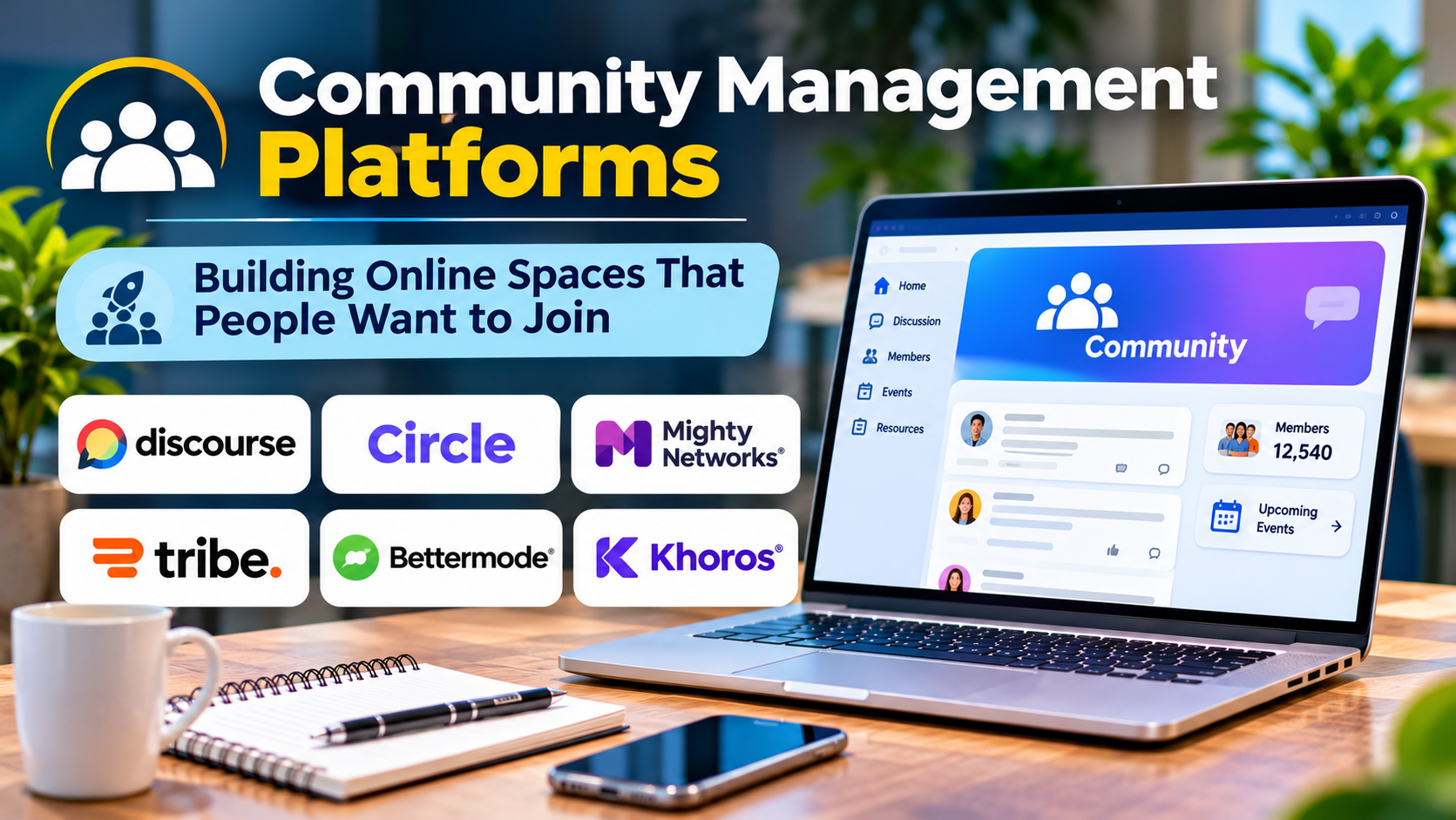
An online community needs more than a discussion board.
Members need reasons to participate, clear expectations, useful conversations, and confidence that the space is worth their time.
Community management platforms provide the infrastructure for organizing these interactions.
But technology alone cannot create a healthy community. Success depends on the purpose, people, and management practices behind it.
What Is a Community Management Platform?
A community management platform is software used to create and operate online spaces where members communicate, share knowledge, and build relationships.
Businesses use these platforms for customer communities, professional networks, product support, education, and membership programs.
Common capabilities include discussion forums, member profiles, content organization, moderation, and engagement analytics.
Some platforms also support events, courses, subscriptions, and branded experiences.
Different Types of Online Communities
Customer support communities
Members help one another solve problems and learn how to use products.
These communities often need searchable discussions and reliable knowledge organization.
Professional communities
Members exchange expertise, share resources, and develop professional relationships.
Networking features and member discovery may be important.
Creator and membership communities
These communities may combine discussion, educational content, events, and paid membership.
Developer communities
Technical communities often require detailed discussions, code formatting, searchable archives, and structured moderation.
The community’s purpose should guide platform selection.
Community Management Platforms Worth Exploring
Discourse
Discourse is an open-source discussion platform designed for structured online conversations.
It is relevant to communities that value searchable discussions, moderation, and long-term knowledge sharing.
Organizations can evaluate hosted and self-managed deployment approaches.
Circle
Circle provides a branded community environment with discussion and membership-oriented capabilities.
It may suit creators, educators, and businesses building dedicated member experiences.
Mighty Networks
Mighty Networks combines community interaction with membership and learning-related experiences.
It is worth considering when a community is closely connected to courses, events, or paid programs.
Higher Logic
Higher Logic offers community solutions associated with professional organizations and customer engagement.
It may be relevant to organizations managing established membership or customer communities.
Bettermode
Bettermode provides community-building capabilities for branded customer and member experiences.
Organizations should evaluate customization, moderation, integration, and content organization.
Important Features to Evaluate
Member experience
New members should understand where to begin and how to participate.
Clear navigation and onboarding help reduce confusion.
Moderation
Administrators need tools for handling spam, harmful behavior, and rule violations.
Moderation policies should explain expectations and enforcement procedures.
Knowledge discovery
Search, categories, tags, and organized content help members find useful information.
Without these capabilities, valuable discussions can become difficult to locate.
Integrations
A business community may need connections with CRM, support, authentication, or analytics systems.
Data ownership
Review export options, account controls, and the ability to migrate community content.
Long-term access to member-generated knowledge can become strategically important.
Measuring Community Health
Member count alone is not a reliable measure of community value.
A large community may have very little meaningful participation.
Useful indicators include active participation, response quality, unanswered discussions, returning members, and member retention.
For support communities, organizations may also examine whether members find solutions.
Qualitative feedback is essential because participation metrics cannot fully describe trust or belonging.
How to Launch a Community
Begin with a clear purpose and a defined audience.
Identify the conversations and resources members will find valuable.
Recruit a small initial group and establish participation guidelines.
Create useful discussions before inviting a wider audience.
Assign community managers responsibility for moderation, engagement, and member support.
Review participation patterns and improve the experience gradually.
Common Mistakes
Launching without a clear purpose often produces inactive communities.
Overusing promotional content can reduce trust.
Weak moderation can discourage valuable contributors.
Excessive categories may fragment discussions before a community has enough activity to support them.
Final Thoughts
Community management platforms provide the structure for meaningful online interaction.
The right choice depends on the community’s purpose, governance needs, and desired member experience.
Successful communities grow when members consistently receive value from participating.