Introduction
Sales performance depends on more than product knowledge, activity volume, and individual experience. Successful sales teams need consistent coaching, clear performance expectations, practical feedback, and opportunities to improve their customer conversations.
However, traditional sales coaching often relies on occasional manager reviews, informal feedback, and limited observation of actual selling behavior.
This creates problems for organizations with growing sales teams, distributed representatives, and complex sales processes.
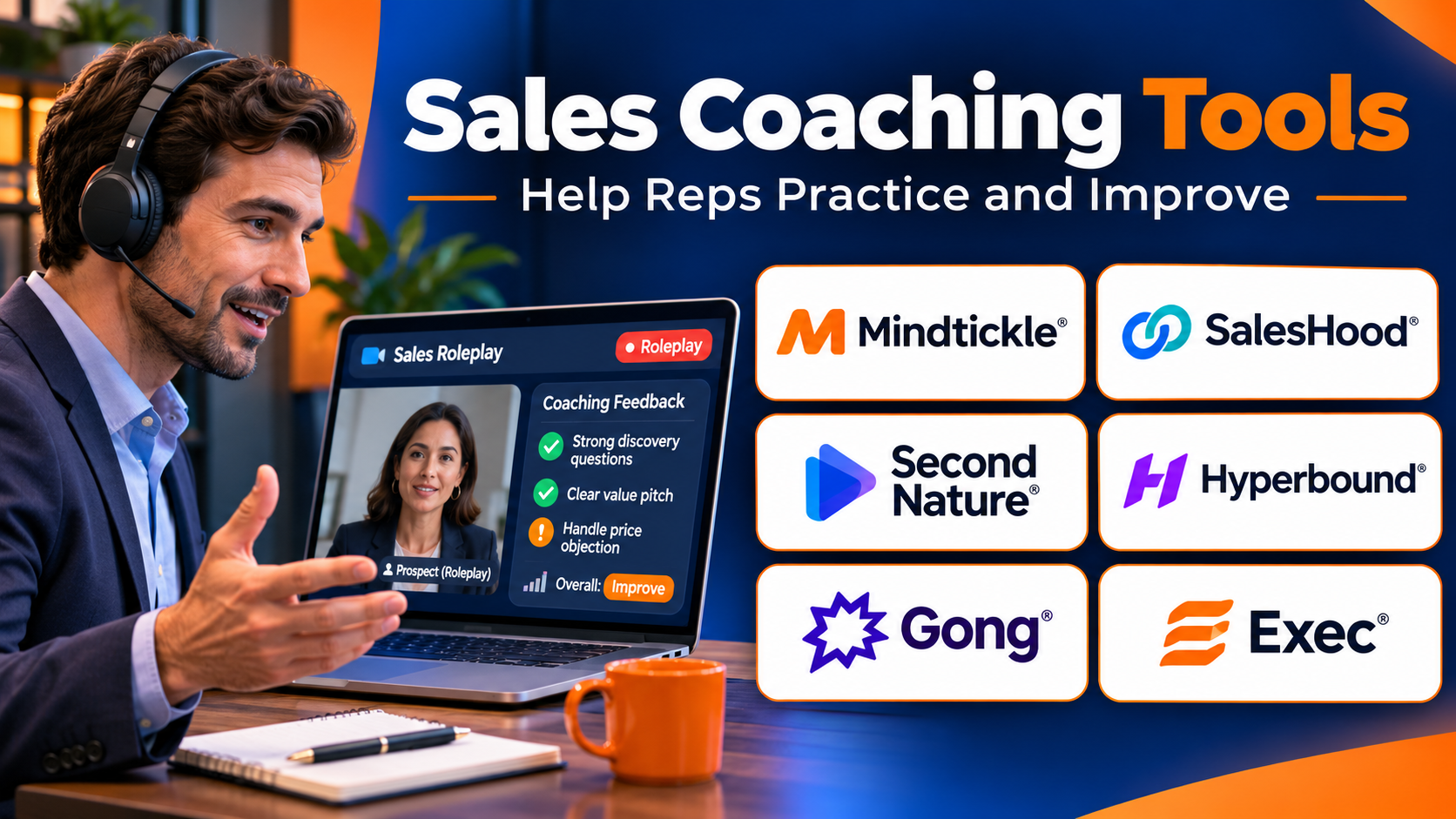
Sales coaching tools help managers evaluate sales interactions, identify development opportunities, organize training, and measure progress.
Modern platforms combine conversation intelligence, AI-assisted feedback, role-play simulations, learning management, performance analytics, and revenue workflow integration.
Some tools specialize in analyzing real customer conversations. Others focus on structured practice, onboarding, skill assessments, or ongoing sales enablement.
Choosing the right platform requires understanding how sales representatives work, which skills need improvement, and how coaching results will be measured.
This guide compares ten established sales coaching tools, explains their strengths and limitations, and provides practical guidance for building a more effective sales development program.
What Are Sales Coaching Tools?
Sales coaching tools are software platforms that help organizations improve the skills, behaviors, and effectiveness of sales representatives.
They provide structured methods for observing sales activities, identifying performance gaps, delivering feedback, and tracking development.
Sales coaching differs from basic sales training.
Training introduces knowledge or techniques. Coaching helps representatives apply those techniques in actual customer situations.
For example, a training course may explain discovery questions, while coaching examines whether a representative asks useful questions during real sales conversations.
Common Types of Sales Coaching Software
Conversation-Based Coaching Platforms
These tools analyze recorded sales conversations and help managers provide specific feedback.
AI Sales Role-Play Platforms
These systems simulate customer conversations so representatives can practice objections, discovery, and presentations.
Sales Enablement Platforms
These solutions combine learning content, coaching activities, assessments, and sales resources.
Revenue Intelligence Platforms
These tools connect conversation insights with pipeline and opportunity performance.
Performance Coaching Systems
These platforms organize coaching plans, scorecards, progress tracking, and manager feedback.
Benefits of Sales Coaching Tools
Effective sales coaching software can help organizations:
- Improve consistency across sales teams.
- Reduce onboarding time.
- Identify specific skill gaps.
- Provide feedback based on actual conversations.
- Support remote and distributed teams.
- Improve discovery and objection-handling skills.
- Track employee development.
- Connect coaching activities with sales outcomes.
However, coaching software does not automatically improve performance. Managers must provide useful feedback, and representatives need opportunities to apply it.
Top 10 Sales Coaching Tools
1. Gong
Short Description
Gong is a revenue intelligence platform that helps sales organizations understand customer conversations and improve sales execution.
Its conversation analysis capabilities make it particularly useful for sales coaching based on real interactions.
Sales managers can review recorded calls, examine discussion patterns, and identify opportunities to improve discovery, objection handling, and customer engagement.
Gong also connects conversation information with broader sales opportunities, helping managers understand how communication quality relates to deal progress.
Organizations can use the platform to build libraries of effective conversations and share examples with developing representatives.
This approach makes coaching more concrete than feedback based only on activity metrics or manager impressions.
However, Gong is a broad revenue intelligence solution rather than a dedicated training platform. Organizations should evaluate whether its wider capabilities justify the investment.
Key Features
- Conversation Recording: Captures supported sales calls and meetings for review.
- AI Transcription: Converts spoken conversations into searchable records.
- Conversation Analytics: Identifies topics, questions, objections, and discussion patterns.
- Coaching Libraries: Helps teams share examples of effective sales interactions.
- Deal Intelligence: Connects conversation signals with opportunity progress.
- CRM Integration: Associates customer discussions with sales records.
- AI Summaries: Highlights important meeting information.
- Performance Insights: Supports evaluation of representative behavior.
- Conversation Search: Finds relevant examples for coaching sessions.
Benefits
Gong helps managers provide evidence-based feedback and identify recurring performance patterns.
It can also improve the visibility of customer needs across the sales organization.
Pros
- Strong conversation intelligence capabilities.
- Useful for practical call coaching.
- Supports deal-level analysis.
- Helps build shared learning resources.
- Integrates with sales workflows.
Cons
- Enterprise investment may be substantial.
- Not primarily designed for structured course delivery.
- Requires consistent manager participation.
- Conversation metrics can be misleading without context.
Use Cases
A software sales manager can review discovery calls to identify whether representatives uncover customer requirements before presenting solutions.
A sales enablement team can build a library of effective objection-handling conversations.
Best For: B2B sales organizations seeking coaching based on real customer conversations.
2. Mindtickle
Short Description
Mindtickle is a revenue enablement platform designed to help organizations improve sales readiness, training, coaching, and performance.
It is particularly relevant for enterprises that want structured sales development programs rather than occasional coaching sessions.
The platform combines learning content, assessments, coaching activities, and readiness insights.
Sales leaders can use it to organize onboarding programs, evaluate product knowledge, and identify skills requiring improvement.
Mindtickle also supports practice-based development, helping representatives demonstrate knowledge before applying it in customer interactions.
Its broader revenue enablement approach makes it suitable for organizations with complex products, frequent launches, and distributed sales teams.
However, implementing a comprehensive enablement program requires clear competency frameworks, relevant learning content, and active manager involvement.
Key Features
- Sales Readiness Programs: Organizes development activities around required competencies.
- Learning Content Delivery: Provides structured training materials.
- Skill Assessments: Evaluates representative knowledge and capabilities.
- Coaching Workflows: Supports manager-led feedback.
- Practice Activities: Helps representatives rehearse sales scenarios.
- Onboarding Management: Structures new-hire development.
- Readiness Analytics: Tracks training and competency progress.
- Content Management: Organizes sales learning resources.
- Performance Insights: Connects development activities with business goals.
Benefits
Mindtickle helps organizations standardize sales development and make coaching more measurable.
It is especially useful when sales readiness must be maintained across many teams.
Pros
- Comprehensive revenue enablement capabilities.
- Strong structured learning support.
- Useful onboarding and assessment workflows.
- Suitable for large sales organizations.
- Supports ongoing skill development.
Cons
- Implementation requires program planning.
- Enterprise pricing may be significant.
- Learning content needs continuous maintenance.
- Smaller teams may not require the full platform.
Use Cases
A technology company can create a certification program for representatives selling a new product.
An enterprise sales organization can evaluate readiness across regional teams.
Best For: Enterprises requiring structured sales coaching, onboarding, and readiness management.
3. Allego
Short Description
Allego is a sales enablement and learning platform that helps customer-facing teams develop skills, access relevant content, and improve selling performance.
Its coaching capabilities are particularly useful for organizations that want employees to learn through practice, feedback, and shared expertise.
Allego supports video-based learning and coaching workflows that allow representatives to demonstrate skills.
Managers can review submissions, provide feedback, and share successful approaches across teams.
The platform also supports sales content and learning experiences, making it useful for organizations that want coaching connected with daily selling activities.
Allego is relevant for distributed sales teams where traditional in-person coaching is difficult to scale.
However, its effectiveness depends on the quality of learning content and the consistency of coaching participation.
Key Features
- Video Coaching: Allows representatives to practice and submit recorded responses.
- Manager Feedback: Supports structured review of employee practice.
- Sales Learning: Delivers training content to customer-facing teams.
- Content Sharing: Distributes useful sales resources.
- Peer Learning: Helps teams learn from successful colleagues.
- Skill Assessments: Supports evaluation of sales capabilities.
- Onboarding Programs: Organizes development for new representatives.
- Performance Tracking: Monitors learning and coaching progress.
- Sales Enablement Integration: Connects development with relevant sales resources.
Benefits
Allego makes coaching more accessible for distributed teams and encourages practical skill demonstration.
Pros
- Strong video-based coaching.
- Useful for remote sales teams.
- Supports peer learning.
- Combines training and enablement.
- Helps standardize onboarding.
Cons
- Requires active content creation.
- Coaching effectiveness depends on manager engagement.
- Platform breadth may increase administration.
- Advanced analytics should be evaluated against requirements.
Use Cases
A medical device sales organization can ask representatives to practice product explanations before customer meetings.
A financial services company can provide structured feedback on client presentation skills.
Best For: Distributed sales organizations emphasizing practice, video coaching, and peer learning.
4. Second Nature
Short Description
Second Nature is an AI-powered sales training platform focused on conversational role-play and skill development.
It allows representatives to practice sales conversations with simulated customers rather than relying exclusively on live manager sessions.
This approach is particularly useful for developing discovery, objection handling, product positioning, and presentation skills.
Organizations can configure practice scenarios that reflect common customer situations.
Representatives can repeat exercises and receive feedback before applying techniques in actual customer meetings.
Second Nature is especially relevant for sales teams that need frequent practice at scale.
However, simulated conversations cannot reproduce every aspect of real customer behavior. Organizations should combine AI practice with observation of actual sales interactions.
Key Features
- AI Sales Role-Play: Simulates customer conversations.
- Scenario Configuration: Creates practice situations based on sales requirements.
- Objection-Handling Practice: Helps representatives respond to customer concerns.
- Discovery Training: Supports questioning and qualification exercises.
- Automated Feedback: Provides guidance on practice performance.
- Skill Assessments: Evaluates selected conversational competencies.
- Onboarding Support: Helps new hires develop confidence.
- Progress Tracking: Monitors practice activity and improvement.
- Scalable Training: Enables repeated practice without requiring a manager for every session.
Benefits
Second Nature gives representatives more opportunities to practice difficult conversations in a controlled environment.
Pros
- Strong AI role-play focus.
- Useful for repeatable practice.
- Supports onboarding.
- Reduces dependence on live practice partners.
- Helps identify skill gaps.
Cons
- Simulated customers may not reflect real buyer behavior.
- Feedback accuracy requires validation.
- Scenario design takes effort.
- Does not replace coaching from actual customer interactions.
Use Cases
A sales team can practice handling pricing objections before a product launch.
New representatives can rehearse discovery calls before speaking with customers.
Best For: Sales organizations seeking scalable AI-powered conversation practice.
5. Hyperbound
Short Description
Hyperbound is an AI sales role-play platform designed to help representatives practice customer conversations and receive structured feedback.
It focuses on realistic selling scenarios such as cold calls, discovery meetings, objection handling, and qualification.
The platform is particularly relevant for sales development representatives and account executives who need frequent conversational practice.
Teams can use simulated buyer personas to recreate challenging situations.
Managers can assign exercises and review progress without personally conducting every practice session.
Hyperbound can help representatives become more comfortable with common objections and improve conversational structure.
However, organizations should evaluate whether the simulated scenarios accurately represent their market, products, and buyer expectations.
Key Features
- AI Buyer Simulations: Creates conversational practice partners.
- Cold Call Practice: Supports outbound sales training.
- Discovery Role-Play: Helps representatives improve questioning.
- Objection Scenarios: Simulates common customer concerns.
- Automated Feedback: Evaluates selected conversation behaviors.
- Practice Assignments: Organizes team training exercises.
- Performance Tracking: Monitors practice progress.
- Custom Scenarios: Reflects specific sales situations.
- Manager Visibility: Helps leaders identify coaching opportunities.
Benefits
Hyperbound can increase practice frequency and help teams develop consistent conversational habits.
Pros
- Focused AI role-play experience.
- Useful for SDR development.
- Supports repeated practice.
- Reduces scheduling barriers.
- Practical for objection handling.
Cons
- Primarily focused on simulated interactions.
- Feedback requires periodic validation.
- Scenario quality affects results.
- Does not replace real call analytics.
Use Cases
An SDR team can practice opening cold calls and responding to common objections.
An account executive can rehearse a difficult pricing discussion before meeting a prospect.
Best For: SDR and sales teams seeking frequent AI-based conversation practice.
6. Quantified
Short Description
Quantified is an AI-powered communication training platform that helps organizations develop customer-facing conversational skills.
It is particularly relevant for sales teams that need structured practice and measurable communication development.
The platform uses simulated interactions and AI-assisted feedback to support improvement.
Organizations can create training experiences around product messaging, customer questions, and difficult sales conversations.
Representatives can practice repeatedly and review their performance.
Quantified is especially useful when businesses want a standardized method for evaluating conversational readiness.
However, communication scores should be interpreted carefully because effective selling depends on context, customer needs, and authentic interaction.
Key Features
- AI Conversation Simulation: Supports realistic communication practice.
- Scenario-Based Training: Organizes exercises around business situations.
- Communication Feedback: Provides insights into selected behaviors.
- Skill Assessments: Evaluates conversational competencies.
- Sales Readiness Support: Helps prepare employees for customer interactions.
- Practice Repetition: Allows multiple attempts at difficult scenarios.
- Progress Analytics: Tracks development over time.
- Custom Training Programs: Supports organization-specific learning.
- Manager Reporting: Provides visibility into employee readiness.
Benefits
Quantified helps organizations scale communication practice and establish consistent skill development processes.
Pros
- Strong communication training focus.
- Supports structured practice.
- Useful for large training programs.
- Provides measurable development signals.
- Suitable for customer-facing roles.
Cons
- Simulated evaluations have limitations.
- Custom programs require preparation.
- Not a full revenue intelligence platform.
- Scores should not be treated as complete measures of selling ability.
Use Cases
A pharmaceutical sales organization can practice approved product communication.
A B2B company can assess how representatives explain technical solutions to different buyer personas.
Best For: Enterprises emphasizing structured conversational skill development.
7. Salesloft
Short Description
Salesloft is a sales execution platform that provides tools for managing outreach, customer engagement, and revenue workflows.
Its conversation intelligence and coaching capabilities help managers review customer interactions and support representative development.
Salesloft is particularly useful for organizations that want coaching connected to everyday selling activities.
Managers can examine recorded conversations, identify communication patterns, and provide feedback.
Sales representatives can also use conversation information to prepare follow-ups and improve customer engagement.
The platform’s broader sales execution capabilities make it useful when organizations want coaching connected with prospecting and opportunity management.
However, businesses seeking a dedicated learning management system may need complementary training tools.
Key Features
- Conversation Intelligence: Analyzes supported sales meetings.
- Call Recording: Captures interactions for review.
- AI Summaries: Highlights important discussion information.
- Coaching Workflows: Supports manager feedback.
- Sales Engagement: Coordinates customer outreach.
- CRM Integration: Connects activity with opportunity records.
- Performance Analytics: Provides visibility into sales activity.
- Workflow Management: Supports structured sales processes.
- Team Collaboration: Helps share conversation insights.
Benefits
Salesloft helps organizations connect coaching with sales execution rather than treating development as a separate activity.
Pros
- Strong sales workflow integration.
- Useful conversation review.
- Supports coaching.
- Combines engagement and analytics.
- Relevant for established sales teams.
Cons
- Broad platform may exceed coaching-only needs.
- Licensing requires evaluation.
- Advanced training content may need separate tools.
- Effectiveness depends on process adoption.
Use Cases
A sales manager can review customer meetings to improve discovery techniques.
A revenue team can compare conversation patterns with opportunity progression.
Best For: Sales organizations using integrated engagement and coaching workflows.
8. Outreach
Short Description
Outreach is a sales execution platform that helps revenue teams manage prospect engagement, opportunity workflows, and customer interactions.
Its conversation assistance capabilities can support sales coaching through meeting analysis and review.
Outreach is especially relevant for organizations that want coaching connected with structured sales processes.
Representatives can use supported conversation intelligence features to review discussions and identify follow-up requirements.
Managers can examine customer interactions to identify improvement opportunities.
The platform also helps teams coordinate sales activities, making it useful for organizations that need coaching alongside execution management.
However, its broader focus means businesses should evaluate whether the available coaching capabilities meet their specific development requirements.
Key Features
- Conversation Assistance: Supports analysis of customer meetings.
- Meeting Capture: Records supported interactions.
- AI Insights: Highlights relevant conversation information.
- Sales Workflow Management: Coordinates selling activities.
- CRM Integration: Connects customer interactions with records.
- Coaching Review: Supports manager examination of conversations.
- Performance Reporting: Tracks sales execution.
- Follow-Up Support: Helps representatives manage next steps.
- Revenue Process Integration: Connects coaching context with opportunity workflows.
Benefits
Outreach helps sales leaders evaluate customer interactions alongside broader sales activity.
Pros
- Integrated sales execution environment.
- Useful conversation assistance.
- Strong workflow orientation.
- Supports manager review.
- Relevant for enterprise sales operations.
Cons
- Not exclusively a coaching platform.
- Implementation requires process alignment.
- Licensing can be significant.
- Some coaching needs may require complementary tools.
Use Cases
A sales manager can examine how representatives handle qualification conversations.
A revenue operations team can identify process gaps that affect follow-up quality.
Best For: Outreach-based sales teams seeking coaching connected to sales execution.
9. Brainshark
Short Description
Brainshark, part of the Bigtincan sales enablement portfolio, provides capabilities for sales readiness, training, coaching, and content-based learning.
It is particularly relevant for organizations that need to prepare representatives for product launches and complex sales conversations.
Brainshark supports structured learning activities and assessments that help organizations evaluate employee knowledge.
Its coaching capabilities allow representatives to practice presentations and receive feedback.
Businesses can use the platform to improve onboarding consistency and maintain readiness across distributed teams.
It is especially useful when sales performance depends on accurate product messaging and repeatable communication standards.
Organizations should verify the current packaging and availability of capabilities within the broader Bigtincan portfolio.
Key Features
- Sales Training: Delivers structured learning programs.
- Coaching Activities: Supports representative practice.
- Video Assessments: Enables review of presentation skills.
- Learning Content: Organizes sales education materials.
- Knowledge Assessments: Evaluates product understanding.
- Sales Readiness Tracking: Monitors development progress.
- Onboarding Support: Helps prepare new representatives.
- Performance Reporting: Tracks training participation.
- Enablement Integration: Connects learning with sales resources.
Benefits
Brainshark helps organizations standardize training and evaluate whether representatives are prepared for customer conversations.
Pros
- Strong sales readiness focus.
- Useful assessment capabilities.
- Supports structured onboarding.
- Practical for presentation coaching.
- Suitable for distributed teams.
Cons
- Product packaging should be verified.
- Training content requires maintenance.
- Less focused on live deal intelligence.
- Implementation needs clear learning objectives.
Use Cases
A manufacturing company can certify representatives before launching a new product.
A sales enablement team can evaluate recorded product presentations.
Best For: Organizations emphasizing sales readiness, assessments, and presentation coaching.
10. Showpad
Short Description
Showpad is a sales enablement platform that combines content management, training, coaching, and buyer engagement capabilities.
It is particularly useful for organizations that want sales development connected with the materials representatives use during customer interactions.
Managers can provide training content, organize learning programs, and support skill development.
Representatives can access approved resources while preparing for meetings and presentations.
Showpad’s broader enablement approach makes it relevant for organizations with complex products or frequently changing sales materials.
Its coaching capabilities are most effective when supported by clear development objectives and practical feedback.
Businesses seeking advanced conversation intelligence may need to evaluate integrations or complementary products.
Key Features
- Sales Training: Organizes learning programs.
- Coaching Support: Helps managers guide representative development.
- Content Management: Centralizes approved sales materials.
- Learning Paths: Structures employee development.
- Assessments: Evaluates knowledge and readiness.
- Buyer Engagement: Supports customer-facing content experiences.
- Analytics: Tracks content and learning activity.
- Sales Workflow Integration: Connects enablement with selling processes.
- Content Governance: Helps maintain consistent messaging.
Benefits
Showpad helps businesses coordinate sales knowledge, content, and coaching within a shared enablement environment.
Pros
- Combines content and training.
- Useful for complex product sales.
- Supports structured enablement.
- Helps maintain consistent messaging.
- Suitable for distributed teams.
Cons
- Less specialized in AI role-play.
- Advanced call analysis may require other tools.
- Content maintenance can be substantial.
- Platform adoption requires coordination.
Use Cases
A technology manufacturer can provide product training and approved presentation materials.
A sales manager can assess readiness before representatives begin selling a new solution.
Best For: Sales enablement teams combining content, training, and coaching.
Sales Coaching Tools Comparison Table
| Platform | Primary Strength | Coaching Approach | Ideal Users |
|---|---|---|---|
| Gong | Conversation intelligence | Real call analysis | B2B sales teams |
| Mindtickle | Revenue readiness | Training and assessments | Enterprises |
| Allego | Video coaching | Practice and feedback | Distributed teams |
| Second Nature | AI role-play | Simulated conversations | Sales training teams |
| Hyperbound | AI buyer simulations | Cold call and objection practice | SDR teams |
| Quantified | Communication training | AI simulation and evaluation | Enterprise training |
| Salesloft | Sales execution | Conversation-based coaching | Revenue teams |
| Outreach | Sales workflows | Meeting insights and review | Enterprise sales |
| Brainshark | Sales readiness | Learning and assessments | Enablement teams |
| Showpad | Sales enablement | Content and training | Complex sales organizations |
How to Choose the Right Sales Coaching Tool
1. Identify the Skills That Need Improvement
Start with specific development requirements.
Examples include discovery questioning, objection handling, product knowledge, negotiation, and presentation skills.
2. Choose the Right Coaching Method
Conversation intelligence is useful for reviewing real interactions.
AI role-play is valuable for practice before customer meetings.
Sales enablement platforms are appropriate for structured training and readiness programs.
3. Evaluate Manager Workflows
Look for clear feedback tools, coaching assignments, progress tracking, and easy access to relevant examples.
4. Review AI Feedback Quality
Automated coaching should use transparent criteria.
Avoid treating conversational scores as definitive measures of employee ability.
5. Examine Integrations
Relevant systems may include CRMs, meeting platforms, sales engagement tools, and learning management systems.
6. Assess Employee Experience
The platform should encourage constructive development rather than create excessive surveillance or administrative work.
7. Evaluate Reporting
Track specific competencies and improvement over time.
Activity counts alone do not demonstrate skill development.
8. Review Security and Privacy
Ensure recorded customer conversations and employee performance information are handled appropriately.
9. Calculate Total Cost
Include subscriptions, implementation, content creation, manager time, and administration.
10. Run a Pilot
Test the platform with a small team and evaluate whether coaching produces measurable behavioral improvement.
Best Sales Coaching Software by User Type
| User Type | Recommended Platform | Reason |
|---|---|---|
| B2B sales managers | Gong | Real conversation analysis |
| Enterprise enablement teams | Mindtickle | Structured readiness |
| Remote sales teams | Allego | Video-based practice |
| New sales representatives | Second Nature | AI role-play |
| SDR organizations | Hyperbound | Cold call simulations |
| Communication training teams | Quantified | Structured AI practice |
| Salesloft customers | Salesloft | Workflow integration |
| Outreach customers | Outreach | Sales execution alignment |
| Product training teams | Brainshark | Assessments and readiness |
| Content-driven sales teams | Showpad | Enablement and coaching |
Practical Example: Improving Discovery Call Performance
Consider a B2B software company with 30 sales representatives.
Managers notice that many discovery calls focus too heavily on product demonstrations before customer needs are fully understood.
Step 1: Define the Coaching Objective
The company wants representatives to ask better discovery questions and document customer requirements more accurately.
Step 2: Establish Evaluation Criteria
Managers define criteria for problem identification, business impact, decision process, and agreed next steps.
Step 3: Select Coaching Tools
The company evaluates Gong for real conversation analysis and Second Nature for simulated practice.
Step 4: Review Baseline Conversations
Managers examine a representative sample of discovery calls.
Step 5: Identify Skill Gaps
The review reveals that representatives frequently move to product features before clarifying customer priorities.
Step 6: Create Practice Scenarios
Representatives rehearse discovery conversations with simulated buyers.
Step 7: Provide Specific Feedback
Managers explain which questions improved understanding and which responses missed opportunities.
Step 8: Apply Skills in Real Calls
Representatives use the revised discovery framework during customer meetings.
Step 9: Measure Improvement
Suppose the proportion of reviewed calls meeting the company’s discovery standard increases from 45% to 70%.
This hypothetical 25-percentage-point improvement should be assessed alongside opportunity quality and customer outcomes.
Step 10: Continue Coaching
Managers repeat the process with new scenarios and adjust coaching based on observed performance.
Frequently Asked Questions
1. What is sales coaching software?
Sales coaching software helps managers and representatives improve selling skills through feedback, practice, analytics, and structured development.
2. How is sales coaching different from sales training?
Training teaches knowledge and techniques. Coaching focuses on applying and improving those skills over time.
3. Which platform is best for conversation-based coaching?
Gong is a strong candidate for organizations that want to analyze real sales conversations.
4. Which tools support AI sales role-play?
Second Nature, Hyperbound, and Quantified provide AI-based conversational practice capabilities.
5. Which platform is best for enterprise sales readiness?
Mindtickle is particularly relevant for structured readiness and enablement programs.
6. Can sales coaching software improve conversion rates?
It may improve selling behaviors and execution, but outcomes depend on coaching quality, market conditions, and sales processes.
7. Can AI replace human sales managers?
AI can support analysis and practice, but human managers remain important for contextual feedback, motivation, and judgment.
8. What should sales coaching scorecards measure?
Useful criteria include discovery quality, customer understanding, communication accuracy, and next-step clarity.
9. How often should sales coaching happen?
Regular, focused coaching is generally more useful than occasional large training sessions.
10. Can coaching platforms integrate with CRMs?
Many platforms support CRM integrations, although capabilities vary.
11. Are AI coaching scores always reliable?
No. Automated assessments can misinterpret context and should be validated.
12. How should remote sales teams receive coaching?
Video practice, recorded conversation review, and structured feedback can support distributed teams.
13. What is sales readiness?
Sales readiness describes whether representatives have the knowledge and skills needed to perform expected selling activities.
14. How much do sales coaching tools cost?
Costs vary by platform, team size, feature set, and enterprise requirements.
15. What is the most important success factor?
Consistent coaching that produces observable improvement in real customer interactions.
Final Thoughts
Sales coaching tools help organizations turn training and performance feedback into continuous development.
Gong, Salesloft, and Outreach connect coaching with real customer interactions.
Mindtickle, Allego, Brainshark, and Showpad support structured enablement and readiness.
Second Nature, Hyperbound, and Quantified provide AI-assisted practice opportunities.
The best platform depends on whether the organization needs conversation analysis, structured learning, simulated practice, or an integrated coaching program.
Businesses should prioritize useful feedback, fair evaluation, manager participation, and measurable improvement in customer-facing skills.